
Biden’s Faculty-Lounge Populism Waged a War on Crypto that No One Asked For

The Biden Administration, guided by the logic of faculty-lounge populism at the regulatory agencies, effectively declared war on the entire cryptocurrency industry. It was a war few if any voters wanted, but fed directly into the stereotypes of the Democratic Party as anti-innovation and the “HR Department of America.”
As the anti-crypto campaign played out, the perception grew even worse. Democrats couldn’t even get guidance and rulemaking right, undermining the public’s trust that the government could effectively perform the role of consumer protection.
Nowhere has this been more evident than in SEC Chair Gary Gensler’s crusade against crypto, which emphasized ideological posturing over pragmatic regulation. Instead of crafting modern rules or clear guidelines, Gensler launched an aggressive crackdown in an anti-crypto campaign heavy on enforcement and light on clarity.
This approach may have played well with Gensler’s chief Senate ally Elizabeth Warren, but it failed to deliver effective consumer protection or smart regulation, and it risked alienating a generation of tech-savvy voters that Democrats can’t afford to lose.
Regulation by Enforcement, No Clear Rules
From day one, SEC Chair Gensler declined to issue clear “rules of the road” for the crypto industry, insisting existing securities laws were enough and that crypto firms simply needed to comply or “come in and register.” In practice, there was no real path for compliance.
SEC Commissioner Hester Peirce acknowledged that under the Gensler regime, market participants were told to “just come in and register” with no viable path to do so. This lack of guidance left even good-faith actors guessing how old rules might apply to new technology. When U.S. Senator Pat Toomey pressed Gensler for clarity in late 2021, saying:
“For investors to benefit from a fair and competitive marketplace, federal agencies should answer questions about whether – and if so, how – new and emerging technologies fit under existing regulations,” Chairman Gensler’s failure to provide clear rules of the road for cryptocurrencies underscores the need for Congress to act.”
Gensler’s written responses to Congress on which tokens are securities versus commodities were famously vague or non-answers. The message to the industry was essentially: We won’t tell you how to comply, but we’ll punish you if you guess wrong.
Enforcement became the tool of choice. Instead of defining digital asset rules or creating new registration categories, Gensler’s SEC moved to classify most crypto tokens as unregistered securities and filed high-profile lawsuits accordingly.
Gensler repeatedly argued no new laws were needed – the law is already clear. In his view, the crypto world was just another security that needed to fall in line with longstanding securities laws. He flatly dismissed complaints about “lack of clarity,” insisting the field “has clarity” and that industry players simply chose to ignore it.
This dogmatic stance meant that legitimate companies seeking to register or get guidance hit a brick wall, while the SEC doubled its crypto enforcement budget and ramped up penalties. The resulting policy posture was a hostile standoff: the agency wielding lawsuits as a first resort, and an innovative industry left in limbo.
Courtroom Setbacks Expose a Flawed Strategy
Gensler’s hard-line approach not only failed to stop bad actors and provide a clear regulatory guidelines for those looking to follow the rules, it also hasn’t held up well in court. In case after case, judges pushed back on the SEC’s overreach, handing the agency stinging rebukes.
For example, in the landmark Ripple case, a federal judge ruled that the sale of XRP tokens on public exchanges did not violate securities laws, sharply undercutting the SEC’s broad claims. Democratic Representative Ritchie Torres cheered the outcome, noting that “crypto regulation by enforcement had a dreadful day in court” and urging the SEC to “reassess its reckless regulatory assault on the crypto industry”.
Around the same time, the SEC faced a defeat against Grayscale, when the D.C. Circuit found the agency “acted arbitrarily and capriciously” in denying a Bitcoin ETF while approving similar products. The court unanimously ruled that the SEC’s inconsistent logic “did not comply with the law,” forcing the agency to retreat and reconsider its stance.
Even Gensler’s signature enforcement action against Binance ran into trouble: a federal judge refused to grant the SEC’s request to freeze Binance’s U.S. assets, denying the agency’s overzealous emergency motion.
One by one, these legal setbacks have exposed the weakness of a strategy built solely on force. They highlight that cracking down is no substitute for clear, lawful regulation.
Political Backlash and Alienated Voters
Ironically, this anti-crypto posturing has also created political collateral damage for Democrats. The Biden Administration’s stance, what Jeff John Roberts described yet another flashpoint in America’s culture wars, was increasingly out of step with many voters. Younger and tech-savvy Americans, in particular, see digital assets not as a scourge to be eradicated, but as an innovative technology akin to the early internet. Crypto owners are demographically more diverse than the average U.S. adult: 68% of crypto owners are Gen Z or Millennials, 48% are non-white, and 70% earn less than $100k.
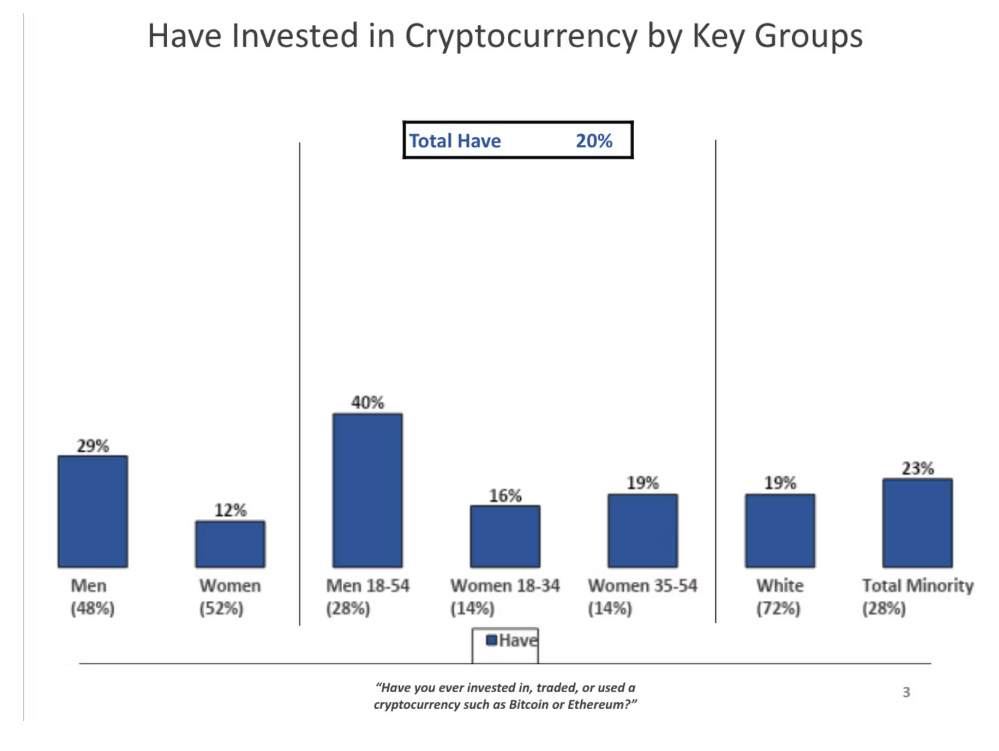
While party elders may want to snuff out the technology, younger Democrats like Rep. Ritchie Torres see crypto’s potential for financial inclusion. The crypto crackdown thus threatens to alienate a key constituency of the Democratic base – the under-40, digitally fluent generation – at a time when their enthusiasm is vital for the party’s future.
Furthermore, by turning crypto into a partisan football, Democrats ceded the narrative to Republicans. GOP leaders have eagerly seized the opportunity to cast themselves as pro-innovation and pro-consumer-choice. House Republicans have accused Democrats of “blocking innovation” in blockchain tech, painting the crackdown as anti-progress.
Senator Warren proudly touts herself as building an “anti-crypto army” as part of her re-election campaign, solidifying the image of Democrats as hostile to crypto. This may score points with her base, but it’s proving a dubious electoral strategy. Even industry-neutral observers warn that writing off a transformative technology (and the voters who understand it) is a mistake.
Posturing vs. Protection: A Missed Opportunity
At its core, the Biden/Gensler “war on crypto” was never truly about protecting the little guy – it was about projecting a political stance. Gensler’s ideological push led him to prioritize a show of toughness over the nitty-gritty work of effective regulation.
The administration could have pursued a nuanced approach: strong consumer protection and support for responsible innovation. Instead, they chose legal posturing. The sad irony is real consumers did get burned in the crypto industry. FTX’s collapse happened on the SEC’s watch, and thousands of ordinary crypto users lost savings in scams that proactive regulation might have prevented. Likewise, the abuse of memecoins could have been prevented if the SEC had acted to clearly regulate them instead of largely ignoring them.
A faculty-lounge populist might find it satisfying to denounce crypto as a predatory mess. But demonizing an entire industry does little to stop the actual predators; it only drives the activity offshore or underground, where U.S. laws and regulations have even less influence.
Democrats don’t need to love crypto to recognize the folly of this approach. Effective consumer protection comes from engaging with new technology and setting sensible rules, not pretending it can be wished away.
The Biden administration’s crypto crackdown, led by Gensler, has been a case study in how not to regulate a nascent industry. By waging a war no one asked for, Democrats created an opening for opponents and estranged many of their own forward-looking supporters.
It’s time to learn from these missteps. A smarter regulatory posture – one that prioritizes clear guidance, workable compliance paths, and targeted enforcement against true bad actors – would do far more to protect consumers and nurture innovation than any ideological crusade ever could.