
The “Revolving Door” Panic That Cost Biden Tech Expertise

When President Joe Biden took office, many expected his team to continue President Obama’s legacy on technology by working closely with the tech and innovation industries and staffing his administration with top-tier tech talent.
The reality was that the Biden Administration largely eschewed hiring leaders from the technology and innovation industries, and that decision blunted its success.
I view staffing as critical to understanding the damaged relationship between the Biden Administration, so I plan to address it over the next few posts.
In this first post, I will try to shed light on the reason for shutting out tech talent from the Biden Administration, and the costs of this unsuccessful attempt at intra-party coalition management.
In my next post, I will do a deep dive on the CHIPS Act as an example of the need for having tech talent within the Administration..
And I’ll conclude with a look at what voters actually think about the question of people with private sector experience in a presidential Administration.
Keeping Big Tech at Arm’s Length – and Losing Out
Biden’s team was clearly wary of criticism from within the Democratic Party coalition as they staffed the administration. The Biden transition team created the Unity Task Force with Senator Bernie Sanders ahead of the Democratic National Convention. The transition teams also focused on balancing the political hires from the Sanders, Warren, and Buttigieg campaigns. The idea is that this effort would help the Biden presidency get out of the gate with no factional infighting hampering their success.
There was no comparable effort to focus on hiring from across the tech industry for jobs where it would be beneficial to have tech talent and expertise. Instead, the default was just to say no in an effort to avoid critics from within the party coalition that was being carefully managed, and to avoid ethics recusals as they tried to move quickly on policy even as the Senate confirmation process chugged along slowly.
From my conversations with several senior members of the Biden transition team and administration, there was no formal “blacklist” of companies or industries, but the perception of certain companies did weigh heavily in hiring decisions.
Early in the term, Facebook’s reputation as allowing disinformation that helped the Trump campaign on their platform helped to disqualify its alumni from consideration for top jobs. And by the end of Biden’s tenure, candidates associated with Elon Musk’s companies (such as SpaceX or Tesla) faced similar skepticism as Musk’s increasingly antagonistic stance toward the administration made his companies political lightning rods.
As Wendy Anderson, an Obama Administration appointee wrote in her recent Washington Post Op-Ed,
“In 2020, the Biden campaign told me that I could not work or be affiliated in any way with it — not for my experience or views, but because I worked at Palantir.”
Wendy had worked directly for two Defense Secretaries and at Commerce during the Obama Administration and had been a Professional Staff Member on the Hill, but the Biden campaign and administration did not benefit from her expertise and experience.
A Coordinated Battle Against Industry Experience
Ironically, even efforts to keep industry at arm’s length failed to shield Biden’s team from conflict-of-interest attacks. Every perceived tie was amplified by critics. A Biden transition team member told me that one appointee’s spouse worked for Amazon Web Services and rival companies would claim bias, assuming Amazon had an inside track. Since there was no effort to conduct a balanced hiring from across the industry, these singular examples took on outsized importance, no matter how tenuous the claim of bias actually was.
But the worst attacks didn’t come from industry, they came from within the Democratic coalition that the Biden transition team had tried so hard to court.
Even before Biden took office, progressive activists mobilized to derail nominees they deemed as too cozy with industry. For example, a left-wing coalition fought to block my former boss from the Obama Administration, Michèle Flournoy, from receiving the nomination to serve as Defense Secretary.
The Revolving Door Project and Project on Government Oversight branded her “ultra-hawkish” and too cozy with industry to serve in the role due to her co-founding a foreign policy think-tank and her work at WestExec Advisors. Flournoy said, “building bridges between Silicon Valley and the U.S. government is really, really important,” even a “labor of love.” This effort was presented as negative and a reason to disqualify the potential first female Secretary of Defense in American history.
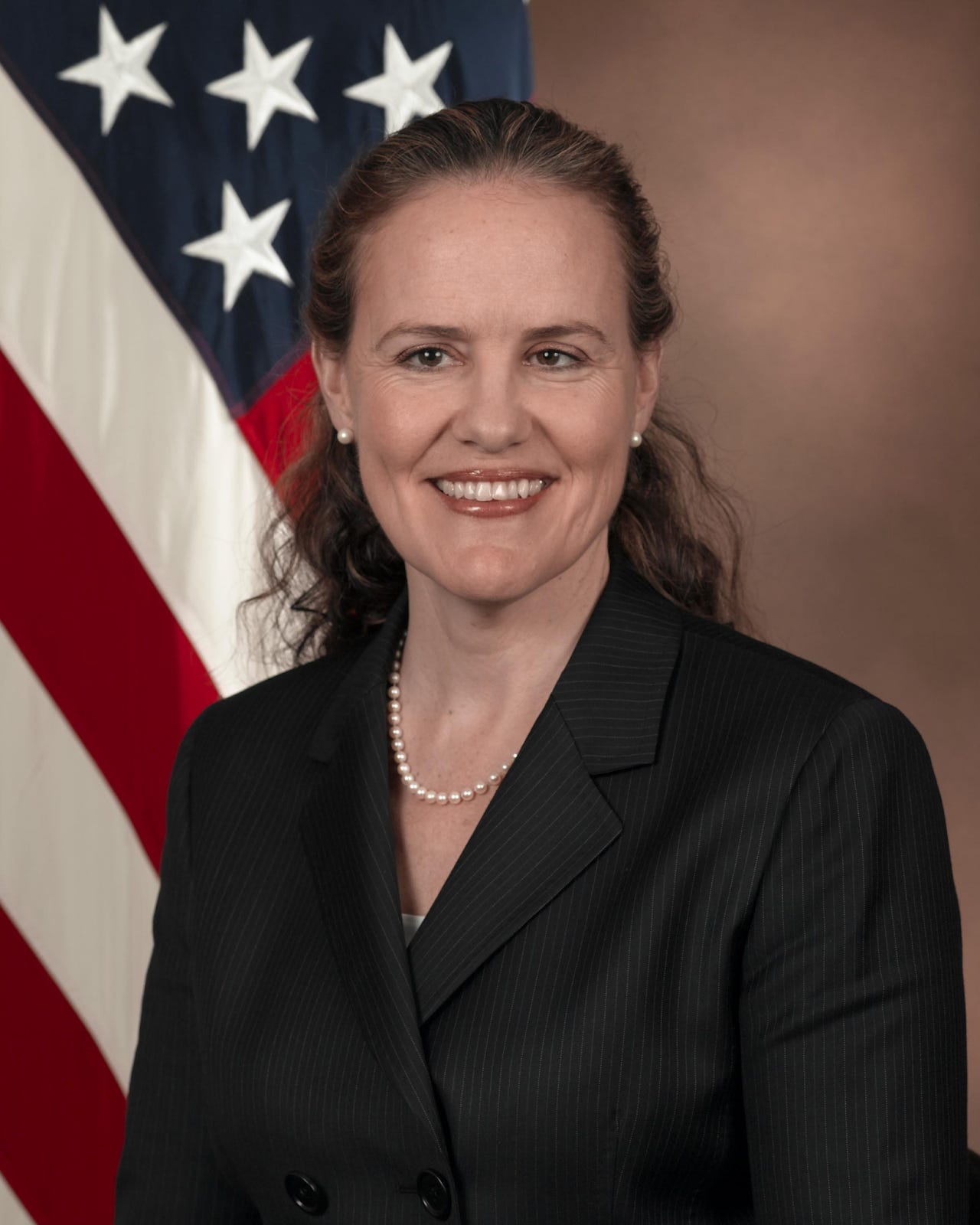
Flournoy did not get the nomination; President Biden instead chose retired four-star General Lloyd Austin to serve as Secretary of Defense.
Progressive watchdogs and their allies in Congress treated almost any tie to the tech industry as disqualifying, and they apparently had inside help. In interviews for this piece with former Biden officials, I was told that people within the administration leaked the names of prospective appointees to the Revolving Door Project, effectively inviting outside activists to help torpedo their chances.
The Revolving Door Project published a watchlist of candidates for senior administration positions they deemed too close to the tech industry to discourage their hiring:
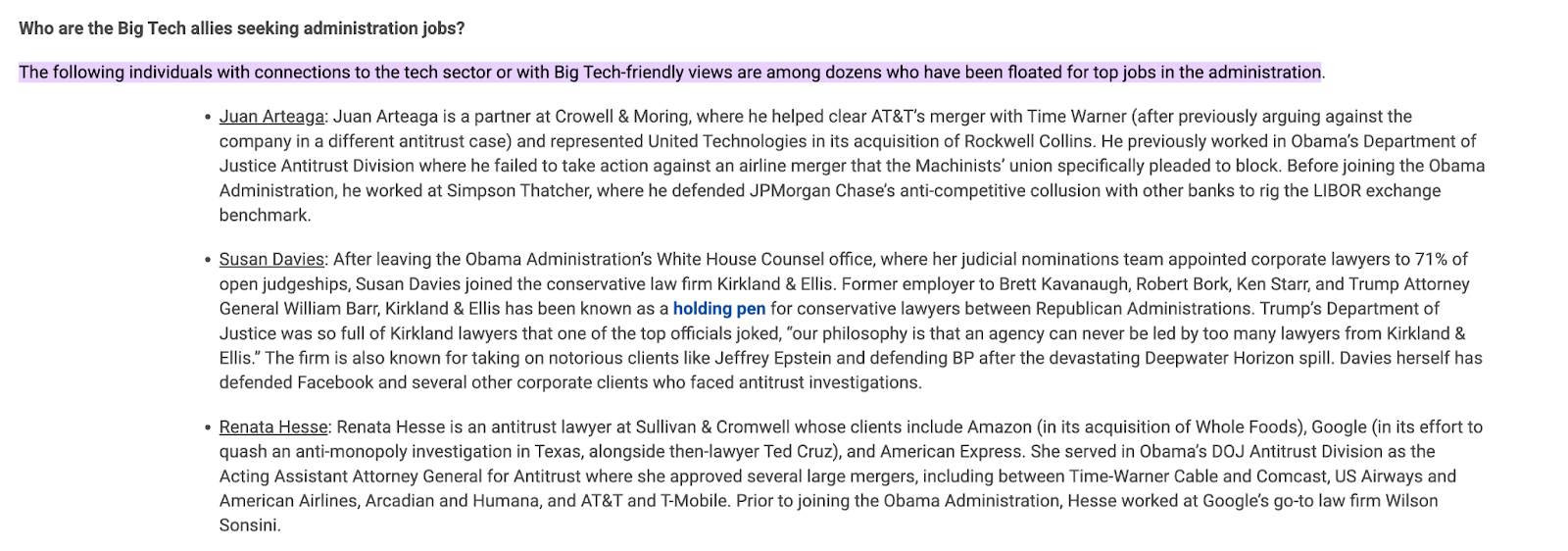
Of the people who appeared on the list, only Susan Davies served in an official Biden Administration role.
Senator Elizabeth Warren and Rep Pramila Jayapal publicly questioned Commerce Secretary Gina Raimondo about former tech employees now in Commerce roles – raising “serious concerns about [the] agency’s approach to digital trade policy” and whether officials might favor their onetime employers, and introduced legislation to make it nearly impossible to hire people with industry expertise.
The Revolving Door Project likewise slammed Raimondo for hiring people with tech-industry experience, accusing her of turning the Commerce Department “into an exclusive club for Big Tech, Wall Street, and other special interests” and setting up a website just to attack her hires. Raimondo, a former venture capitalist and governor of Rhode Island, was one of the few Biden Cabinet members with bona fide sector experience. Yet when she did bring in private-sector experts to help implement major initiatives such as the CHIPS Act, the blowback was fierce.
The message to Biden’s inner circle was clear: hiring industry talent carried political risk, and the administration erred on the side of exclusion and coalition management.
Political and Policy Consequences
Deciding to shun experienced tech industry leaders had both a policy and political impact.
On policy, lacking insiders meant Biden’s administration often lagged behind the pace of innovation. They pursued technology, AI, and crypto policies without in-house expertise from the people who had built platforms at scale. Execution of tech implementation was often muddled, and it reinforced the concept that the government has a shaky grasp on tech’s best tools.
On politics, shunning Silicon Valley led many tech leaders to see Biden as disinterested in the views and expertise of the tech industry. This opened the door for some Valley figures to gravitate towards GOP figures more eager to engage, while progressive critics still cried foul over even minor industry links. Biden paid the political price of tech “entanglement” without gaining the benefits of tech expertise.
For all the talk of appeasing populist sentiment, this strategy “did not conjure… some new populist coalition,” as Matthew Yglesias observes. What it did conjure was an administration stocked with academics and NGO veterans – “more sociologically isolated, not less,” from real-world issues.
The lesson is straightforward: you can bring tech talent into government ethically – with transparency and guardrails – but you cannot effectively govern a tech-driven economy without people who understand tech from the inside. Biden’s record shows that keeping Silicon Valley at arm’s length doesn’t actually spare you controversy; it just leaves your team slower and less capable.