
Biden Put the Brakes on Safer Roads and Drone Deliveries

Each year in the United States, tens of thousands of people die on the nation’s roads. According to the National Highway Traffic Safety Administration (NHTSA), 40,901 people were killed in motor vehicle crashes in 2023 and 39,345 deaths in 2024. Even if fatalities are gradually declining, the scale of loss remains staggering—roughly the equivalent of a small city dying on the roads every year.
What makes this toll increasingly troubling is that much of it is preventable. Autonomous vehicle technology, especially in robotaxis and long-haul trucking, offers a realistic pathway to dramatically reducing traffic deaths. Yet federal policy during the Biden Administration too often emphasized caution and process over deployment, slowing the rollout of technologies that will save lives.
Failure to support the adoption of private-sector innovation in autonomous vehicles was another key element of the Biden Administration Digital Deficit. Life-saving technologies exist, but the Biden Administration refused to move them forward.
And while it may not have similar life and death consequences, the Biden Administration also held back progress in helping consumers by limiting the employment of drone delivery technology.
Human Drivers Remain the Primary Safety Risk
The case for autonomous vehicles begins with a simple reality: humans remain the most dangerous component of the transportation system.
NHTSA research found that the critical reason for crashes was attributed to the driver in 94 percent of cases studied, reflecting the central role of human error in road fatalities.
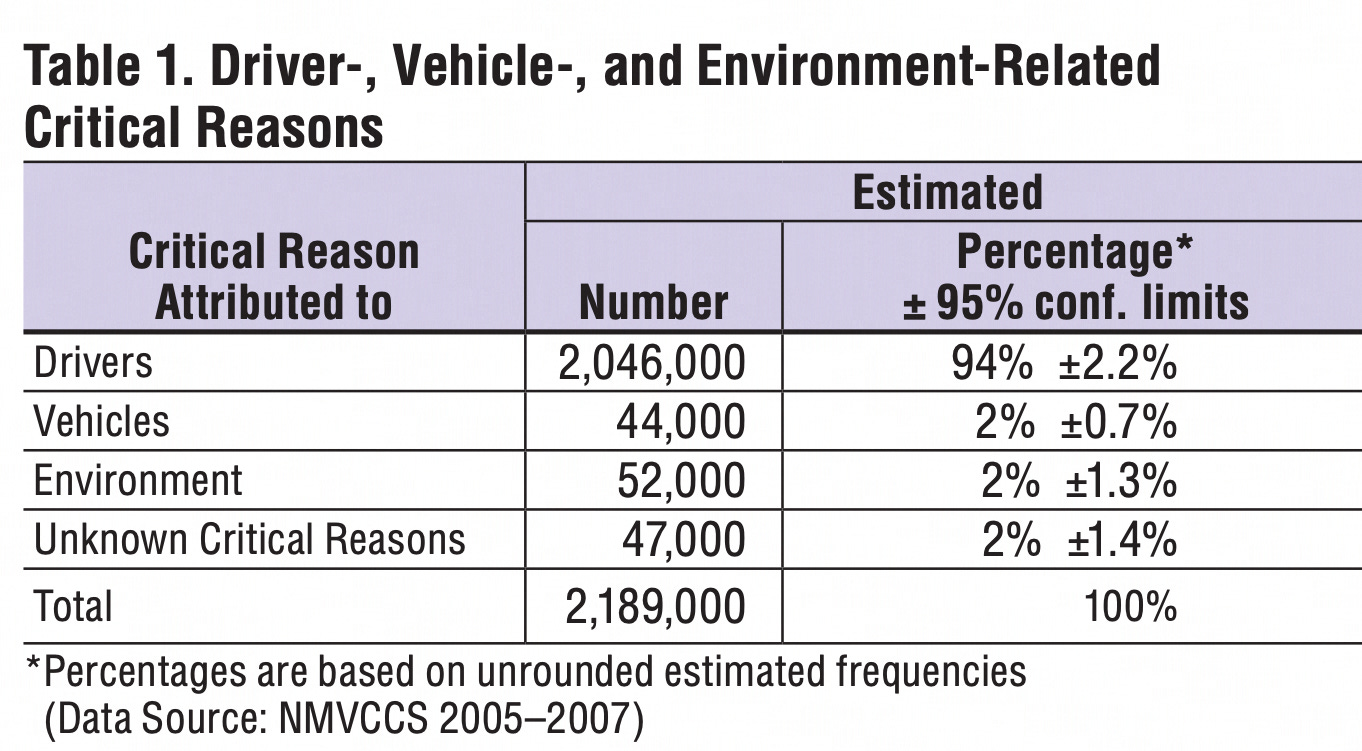
Human drivers become distracted, fatigued, impaired, or aggressive. Autonomous systems, by contrast, are designed to remain attentive and rule-following within their operating environments.
Secretary Buttigieg correctly identified the problem:
“Just to be very clear, human drivers aren’t just problematic. They are murderous. Forty thousand people a year die in a car crash. And we have been bathed in this level of carnage all our lives. And so we’re a bit like people who grow up in a place that’s experiencing a war, in terms of how normal we think that is.”
Technology is not always the answer to everything. But frankly, it would be hard to do worse than human drivers when it comes to what we could get to theoretically with the right kind of safe autonomous driving.”
What Buttigieg did not do is push his own department to advance this life-saving technology as quickly as possible.
At the end of the Biden Administration Jeff Farrah, who heads the Autonomous Vehicle Industry Association, said in an interview, “The federal government is the one that needs to lead when it comes to vehicle design, construction and performance, and we just have not seen enough action out of the federal government in recent years.”
Robotaxis Could Have Paved the Way for Autonomous Cars
For robotaxis, the central federal constraint is that the U.S. Federal Motor Vehicle Safety Standards (FMVSS) and closely related rules historically presume a “traditional” car with a human driver and associated equipment (controls, displays, etc.). NHTSA itself has acknowledged both that compliant AVs can be deployed under existing rules and that FMVSS modernization is needed for AVs. That is exactly the policy space where a pro-adoption DOT would be expected to deliver: clear, timely, scalable regulatory pathways and updated standards for vehicles built around autonomy. This just did not happen in the Biden Administration.
The Biden Administration DOT did not complete the modernization (or robust exemptions) that would let companies deploy purpose-built driverless robotaxis broadly in the U.S. during Biden’s term. Building a “driver-in” car, then removing the driver will never be the most cost-effective way to deploy this technology, but it is what robotaxi companies were stuck with.
Even as Secretary Buttigieg was saying the right things, NHTSA told Congress in its May 2024 report:
“As the technology develops, the Department and NHTSA will advance their research and policy agendas to identify areas of economic benefit and risk and give workers a seat at the table in shaping innovation to create benefits for workers and prevent workforce disruption.”
This “seat at the table” ended up functioning as an organized labor veto over autonomous vehicles. Biden DOT officials signaled in numerous meetings with industry that the Administration would not do anything to cross organized labor, which meant AVs would stall.
Finally, after years in office, the administration’s principal federal framework for AV operations was proposed late, voluntary, and not finalized in time to govern the market – leaving adoption largely to state and local regimes and company-by-company compliance strategies.
Autonomous Trucks Could Have Addressed a Major Highway Safety Problem
If robotaxis represent the most visible form of autonomy, autonomous trucking may represent the largest safety opportunity.
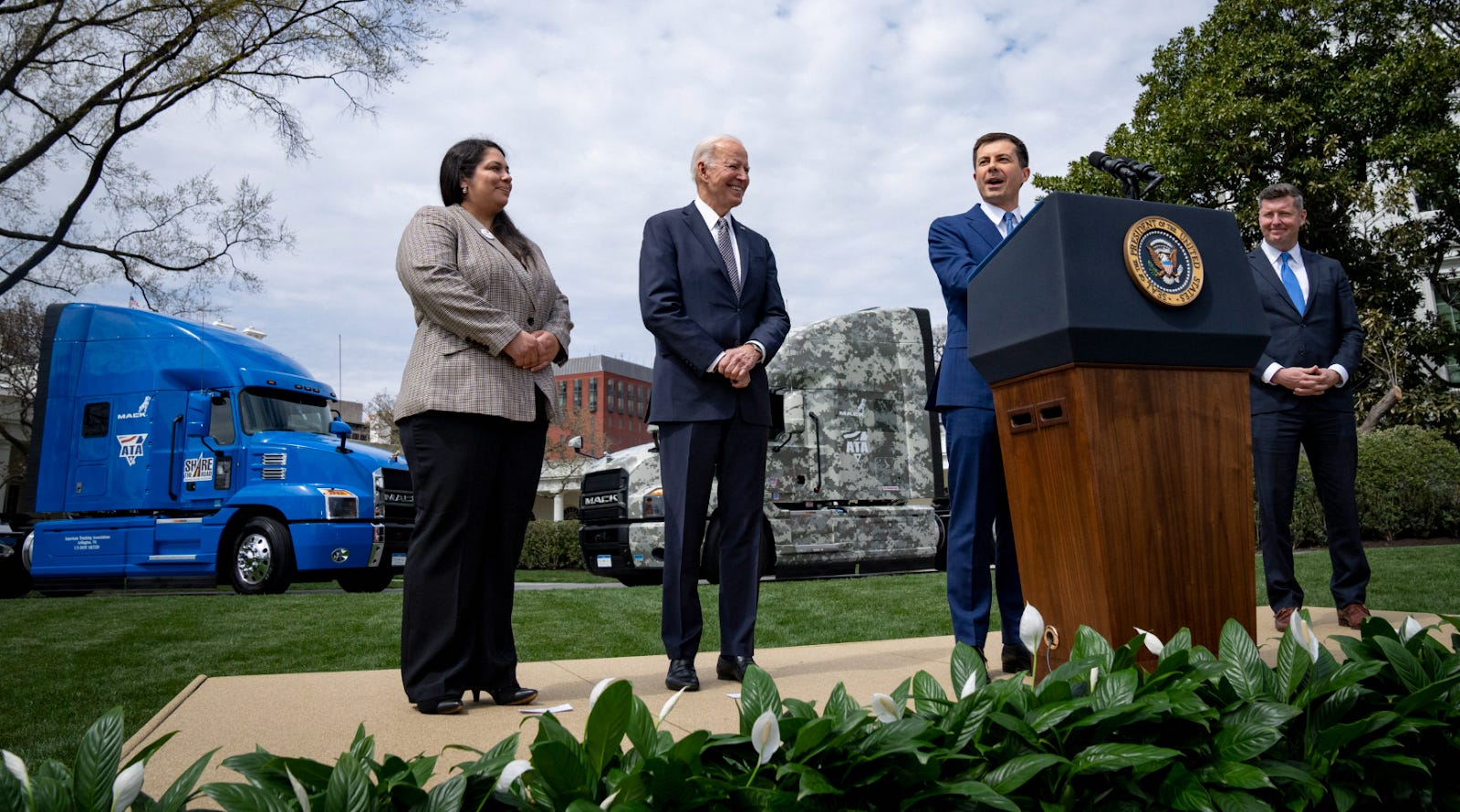
Large trucks are involved in a disproportionate share of fatal crashes. According to the Federal Motor Carrier Safety Administration, more than 5,000 people die annually in crashes involving large trucks, most of them occupants of passenger vehicles.
In spite of this opportunity, the Biden Administration again held back progress. The Administration denied Waymo and Aurora’s request to use cab-mounted warning beacons instead of human-deployed triangles or flares for stopped driverless trucks. The request had been in the docket since March 2023, so the agency took roughly 21 months to decide. In the denial, FMCSA said the application showed “promise” and that DOT “embraces” innovation, but still rejected the exemption because the data and device details were “insufficient” for a broad nationwide exemption.
This was another missed opportunity for the Biden Administration, but Democrats in the House and Senate can still support the legislative fix. Right now, the legislative language for the surface transportation bill that would resolve this issue has no Democratic co-sponsors.
Delivery Innovation as Stuck in Regulatory Limbo
Autonomous mobility is not the only technology facing a digital deficit. A similar pattern appears in drone delivery services.
During the Biden Administration, the Federal Aviation Administration (FAA) failed to adopt new rules and regulations to take advantage of drone deliveries, a technology that can make products available to more people at a lower cost. According to the FAA’s own rulemaking committee’s 2022 report, “Notwithstanding these benefits for the American public, current Federal Aviation Administration (FAA) regulations do not enable the domestic UA beyond visual line-of-sight (BVLOS) industry to scale and achieve meaningful results from those benefits.”
The lack of effective rules and regulations meant that delivery providers are left with a patchwork of exemptions and pilot programs.
Although the FAA acknowledged the potential for expanded drone operations—including package delivery—the comprehensive rulemaking framework remained delayed for years, costing Biden a potential win in this area.
The Trump Administration was quick to propose rule changes that the Biden Administration failed to implement. In 2025, Transportation Secretary Sean P. Duffy announced Part 108, a proposed FAA rule that would transform how businesses obtain permission to fly drones beyond the pilot’s visual line of sight. “In the past, drone operators had to apply for waivers on a case-by-case basis,” Duffy said. “Because of that complication, I don’t think we saw the innovation we should have in America.”
The Cost of Failing to Support Innovation
As I have written about before, the seeds of the Biden Administration “war on tech” were planted in Hillary Clinton’s loss to Donald Trump in 2016, and “Big Tech” has become an easy attack angle for Democratic politicians. While unhelpful, these attacks could be written off as consistent with a general “Big is Bad” mentality and residual anger at Facebook’s role in the election.
However, the failure to seize the opportunity to embrace autonomous vehicle and drone delivery technology told voters that the Democratic party no longer valued innovations that would improve their lives.
The real question for Democrats is whether they will be the party to accelerate the deployment of breakthrough technologies that put American lives and consumer interests first – or continue allowing them to sit on the shelf while we cede the breakthroughs of American innovation to Republicans and red states.