
Online AI Discourse Doesn’t Make It a Good Campaign Issue

Polling shows that voters are uneasy about the AI boom, but the internet can distort scale. Online, it can feel as though data centers and AI are the only things happening in politics. This should serve once again as a reminder that social media is not real life.
Online discourse and Congressional offices are dominated by highly-educated, tech-savvy professionals who spend all day sitting at a computer. These are exactly the people who you would expect to care the most about AI - they use it professionally, and the most likely to have it disrupt their work and professions.
But the campaign and Congressional Staffer Class is not at all representative of the American electorate. As of 2024, about 36% of Americans who are 18 or older have a bachelor’s or advanced degree. For most people, AI issues are not top of mind and they do not anticipate that it will dramatically change their lives.
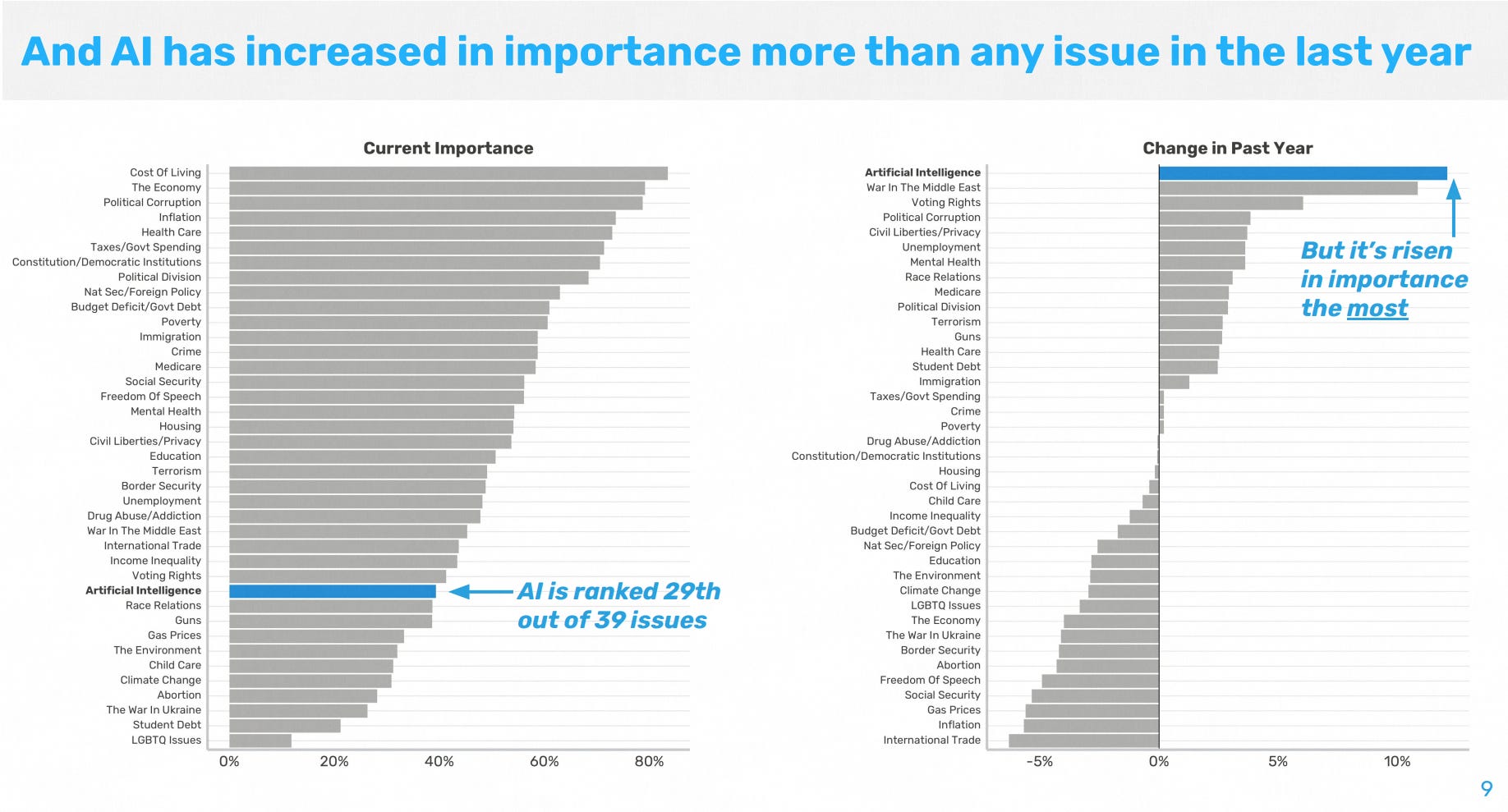
David Shor’s Blue Rose Research found that AI has risen in importance faster than any issue over the past year, but it still ranks only 29th out of 39 issues. Cost of living is at the top. In Blue Rose’s 2024 retrospective, Shor highlights that voters are considering AI as part of a broader economy that they view as rigged, or not working for them. In voter’s minds, AI is a subcategory about their concerns about the cost of living or jobs.
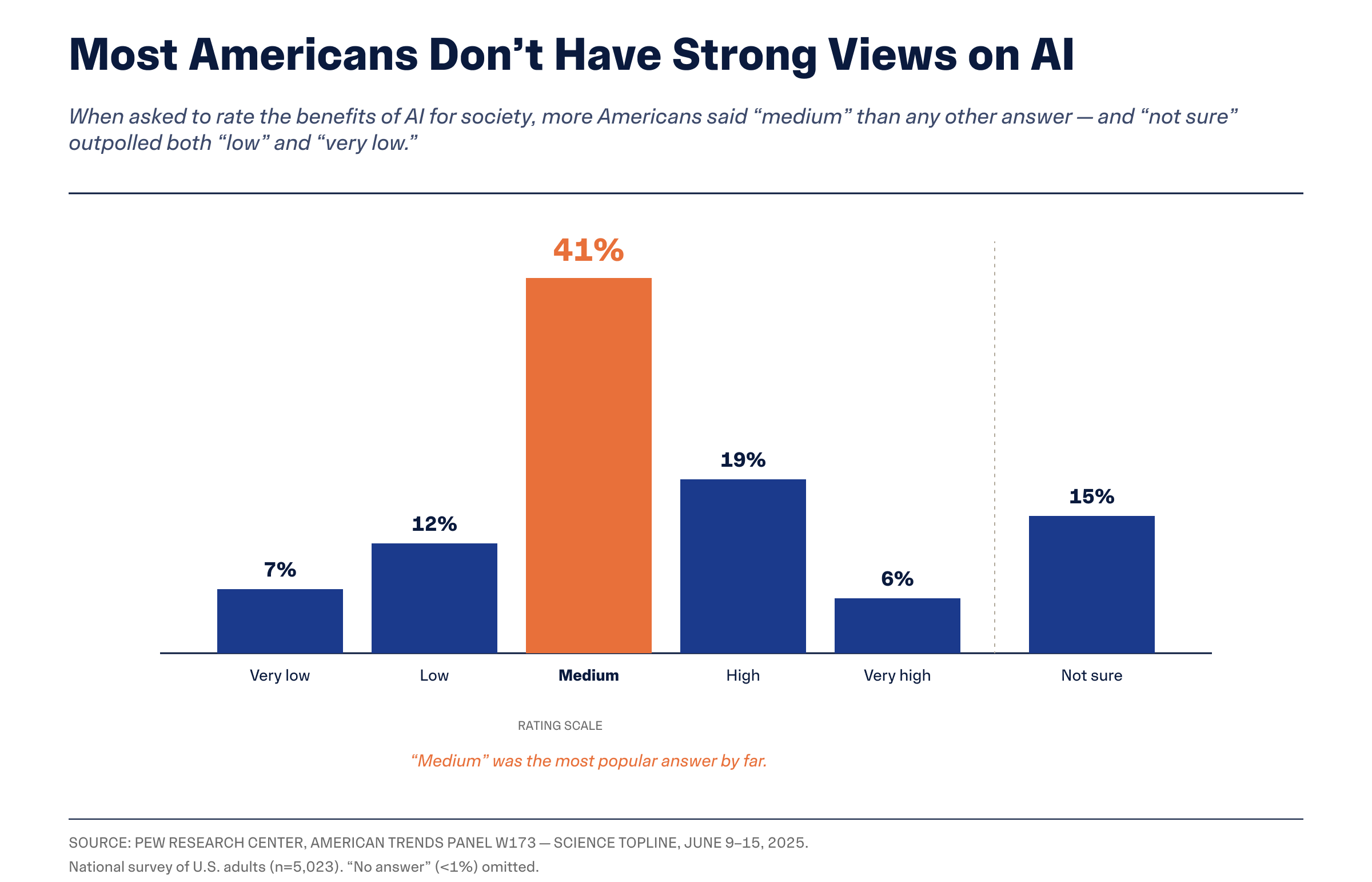
Before Democrats build their campaigns or legislative strategies around opposition to AI, it is important to put the issue into perspective. Pew found that among Americans they polled about the benefits of AI, their overwhelmingly most popular answer was “Medium” with “Not sure” outpolling “Low” and “Very low.”
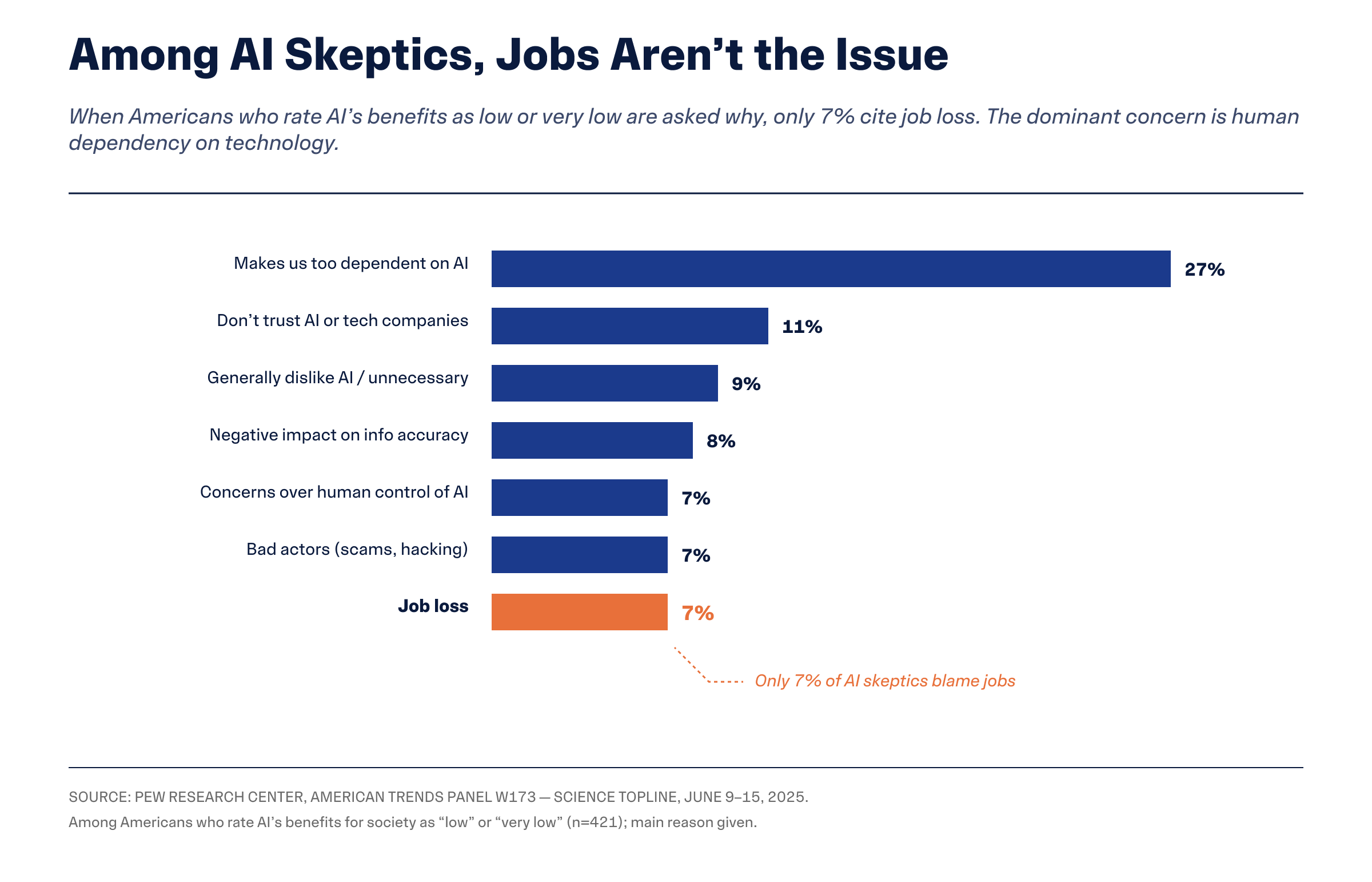
Of those ranking the benefits as low or very low, job loss was cited as the reason by only 7% of respondents. This is not the kind of national hot button issue to center in a political agenda.
Despite this polling data, Sen. Bernie Sanders and Rep. Alexandria Ocasio-Cortez proposed an AI Data Center Moratorium Act that would pause AI data-center development until national safeguards are in place on safety, workers, electricity prices, communities, and the environment. The left wing of the party may think that “No new data centers until every federal guardrail is settled” sounds responsible, but in reality it means waiting for a federal consensus that will never arrive.
In practice, an anti-AI posture feeds into the narratives about Democrats that helped make Biden and the party brand so unpopular. We are the nanny state scolds, we are anti-business and innovation, and not focused on the issues that voters care about most.
Democrats need to be able to respond to real concerns and issues around AI implementation, but starting from a position of banning data centers puts Democrats in a bad negotiating position with AI companies to implement and adhere to voluntary standards and puts Democrats out of step with voters who are generally supportive of American innovation.
Fortunately, the more moderate elements of the party are not following Sanders and Ocasio-Cortez down this path. Even as he argues that Democrats should tune out the threats from political spending groups looking to avoid AI regulation, Democratic political strategist Rob Flaherty shoots down the idea of an AI moratorium:
Moratoria on AI are profoundly ill-advised. Whatever we do, the technology is coming, and it could be genuinely and positively transformative. Right now AI is set to be used by a handful of billionaires to further entrench their wealth – either because they run a frontier lab or they run a company that will benefit from “efficiency.” But it doesn’t have to be that way. We should utilize this technology to ensure that it benefits all of us in myriad ways. Everyone talks about cures for cancer, but imagine something even bigger than that: a world where huge productivity gains enable everyone to lead better, more fulfilling lives. That’s only going to happen if we institute rules of the road.
Rob Sand, the Democratic candidate for governor in my home state of Iowa, is a useful example for how the party should handle the issue on the campaign trail. As state auditor, Sand discussed using AI in auditing to save time and let staff focus on higher-value analysis. But his public campaign priorities don’t focus on AI or data centers at all. They are built around growing Iowa’s economy, strengthening public education, lowering costs, improving health, and restoring accountability in government.
That emphasis fits Iowa. Donald Trump carried the state by about 13 points in 2024, and Iowa has a lower share of adults with a bachelor’s degree than the country overall. A campaign in that environment cannot be optimized for white-collar internet discourse. It has to speak to people who are asking whether their bills are going up, whether their kids can find good jobs, whether government works, and whether politicians are focused on ordinary people. And it is working. Sand is leading in the polls against his most likely Republican opponent.
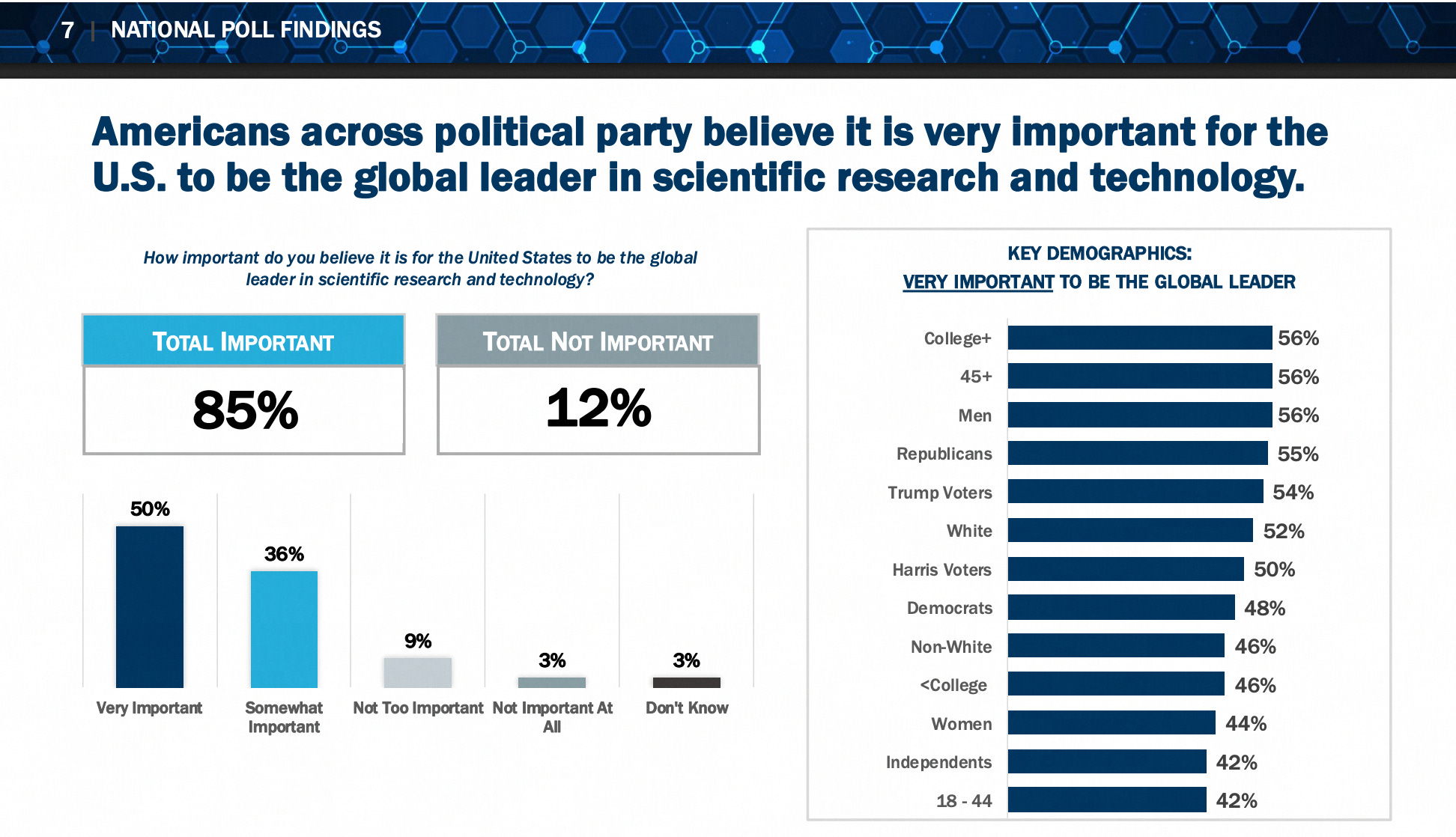
Democrats especially must be careful not to turn regulation into an anti-innovation brand. Voters are not anti-science or anti-technology. A 2025 Science Coalition poll found that 74% of voters support federal investment in scientific research, and 85% say it is important for the United States to lead the world in science and technology.
The right message is not “let the AI labs do whatever they want.” It is also not “freeze the future until Congress reaches bipartisan consensus.”
The right message is not an AI-exclusive message at all. Build what improves people’s lives, drive down energy costs with greater production, and use AI now to make government faster, better, and more accountable.
AI companies pre-buying RAM and other components for their data centers and more has caused real costs at checkout for hardware to increase greatly. Game consoles, pre-built computers, individual PC components like RAM sticks and SSDs have all gone up in price. It’s also caused stock and availability issues for some hardware, like the Steam Deck. AI is raising the price of things and causing scarcity in the real world and that is something that needs to be addressed.
There are innovative projects and ideas that people may not be able to bring to fruition because AI is making the hardware they need to develop their projects is too expensive.