
2028 Dems Should Think Twice About Getting Advice From Bidenonomics Architects

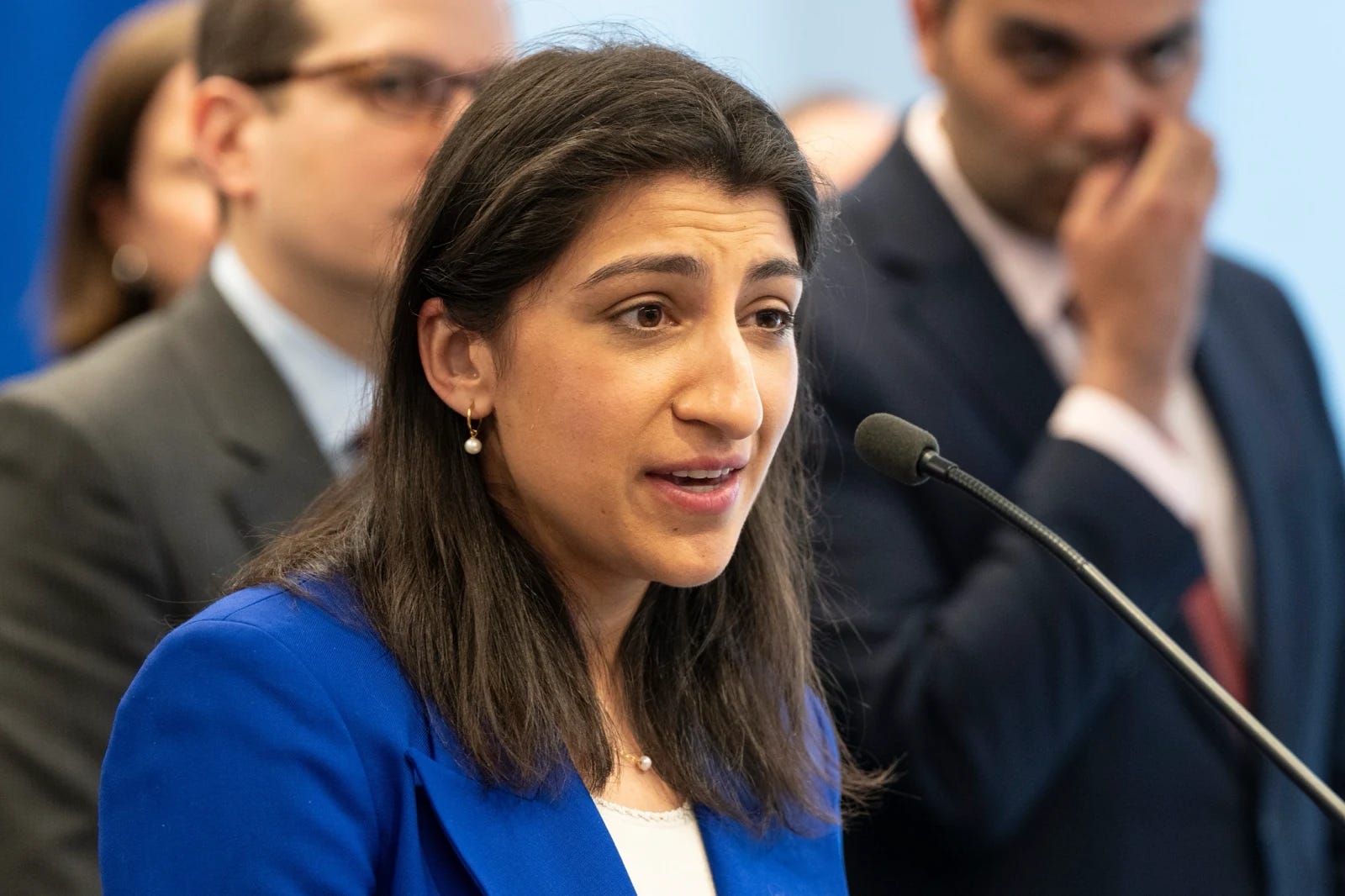
CNN’s recent article on Lina Khan and the 2028 Democratic field makes a provocative claim: Democrats with presidential ambitions are calling the former FTC chair as they search for a new economic message. But the article’s own evidence that this is happening is thinner and more revealing than the headline suggests.
The piece reports that Khan is receiving outreach from Democrats eyeing future campaigns and that Sen. Elizabeth Warren is sharing her contact information with presidential hopefuls. But when the article turns to actual 2028 figures, the support becomes much more ambiguous. Even the candidates voicing support for Khan provided statements about governing better and supporting workers that weren’t really about her or her regulatory policies at all.
The clearest praise for Khan in the CNN story comes from Warren and Bernie Sanders, but neither is a likely 2028 presidential contender.
Beyond the headline however, the article quotes several Democrats, including likely 2028 hopefuls, expressing skepticism about Khan’s approach.
During the last presidential campaign, Maryland Governor Wes Moore said “I think we have to” when asked if Kamala Harris should shift her regulatory views away from Khan’s. Asked about Kahn more recently, a spokesperson for Moore said that he “doesn’t have thoughts about her one way or the other.”
In casting doubt on Khan’s proposed solutions, Rahm Emanuel put it this way:
“Rather than say ‘Lina Khan,’ which has its own explosion, the guiding light should be where Teddy Roosevelt was more about regulation and Woodrow Wilson was more about breaking out: that spirit is important, and that mindset.”
Rep. Josh Gottheimer voiced a worry about further alienating the innovation and growth voters within the Democratic party:
“You may fire up some portion of the base, but you’re also going to alienate a lot of people who, while they want competition and success for everybody, they also believe that you can start a business and be successful in America.”
The real question the 2028 Democratic hopefuls need to ask themselves: Should they look to the architects of Bidenomics to map a winning way forward for Democrats?
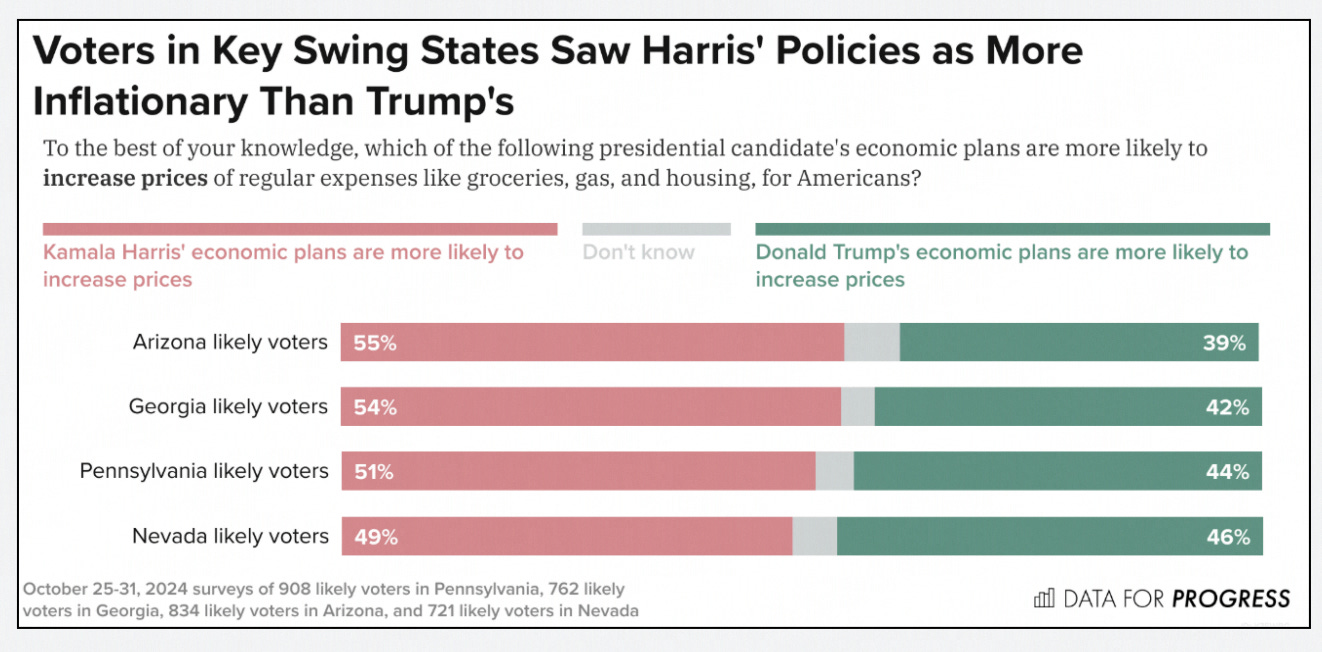
Data for Progress’ post-election report found that inflation and cost of living were the top issues in the election, that voters were deeply dissatisfied with Biden’s economy, and that Harris struggled to separate herself from Biden’s legacy on economic issues.
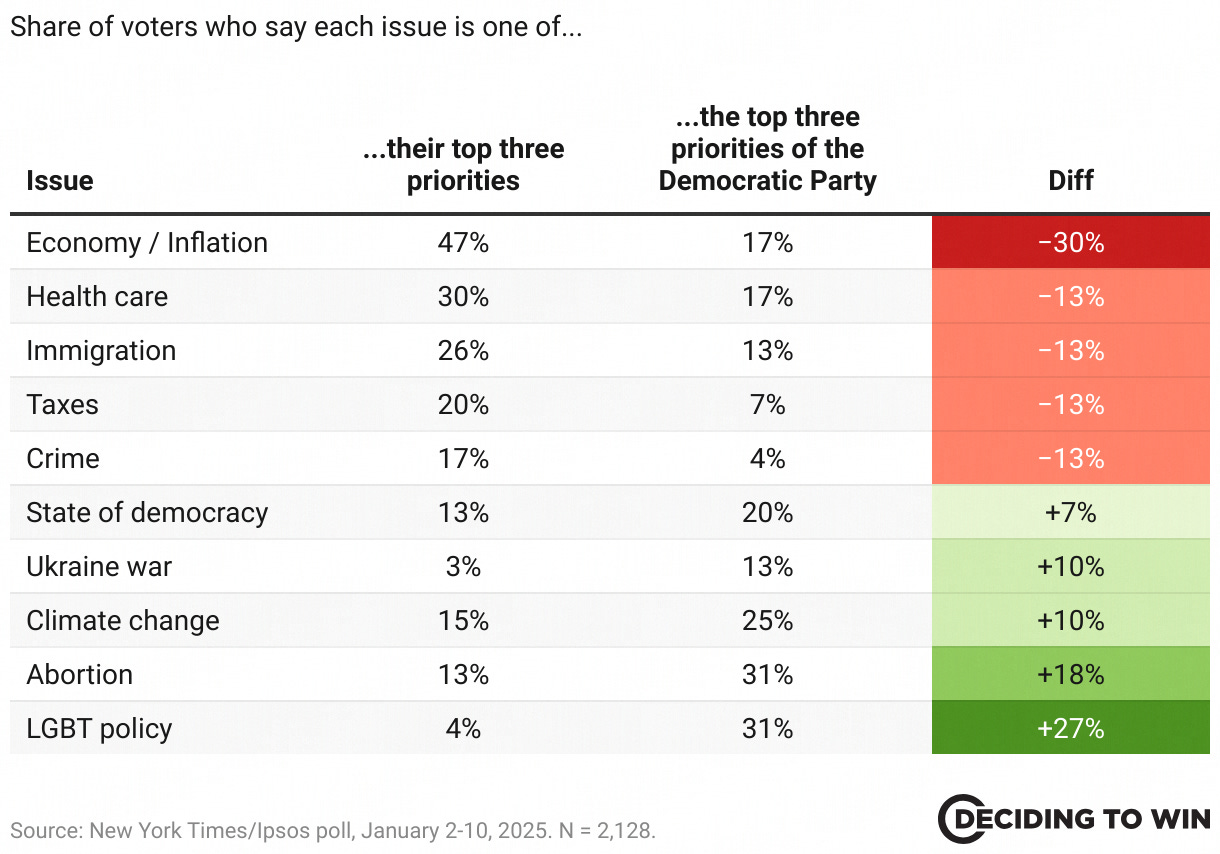
WelcomePAC’s Deciding to Win report similarly argued that voters see Democrats as not sharing their priorities. Voters viewed Democrats as insufficiently focused on cost of living, the economy, health care, taxes, immigration, and crime, while too focused on issues that rank lower in salience. It also found that highly educated and affluent Democrats prioritize issues differently from working-class voters, including placing relatively less emphasis on cost of living, gas prices, border security, and crime.
That analysis should make Democrats wary of confusing elite anti-corporate theory with working-class politics.
The Biden tech regulatory approach of “faculty lounge populism“ and anti-corporate politics rooted in academic theories about power and concentration, but often disconnected from immediate consumer needs. Biden’s tech regulators elevated fights over mergers, targeted advertising, and anti-bigness theories while voters were asking for affordability, privacy, security, scam prevention, and government competence.
The Biden administration already tried a version of this politics. It appointed Khan at the FTC, Jonathan Kanter at DOJ Antitrust, and other post-neoliberal regulators who treated corporate power as the central economic story. Yet the promised political payoff did not arrive.
Anti-tech populism became lose-lose politics, straining and breaking relationships with innovation-economy allies without winning back working-class voters. Public postmortems point in the same direction: voters wanted lower prices, practical economic management, and a party that shared their priorities.
We can’t count on the anti-corporate regulators of the Biden Administration to learn these lessons and pass them on, as Bloomberg columnist Conor Sen pointed out on X:
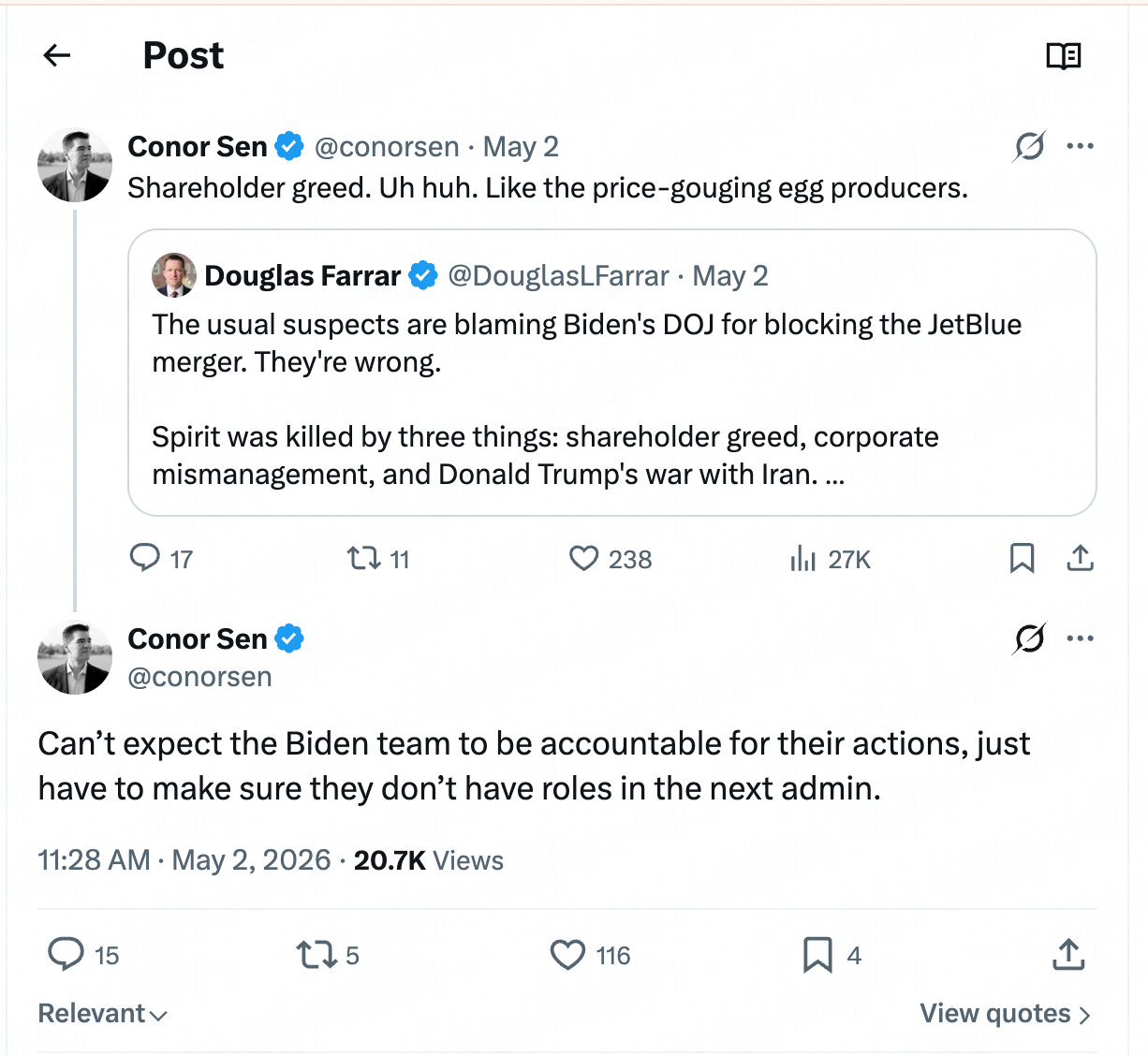
In the context of the collapse of Spirit Airlines, former Biden officials were using the same lines about corporate greed instead of reflecting on the wisdom of preventing a merger on their watch.
Democrats do not need more anti-tech regulatory crusades. Voters judge economic policy by whether it improves their lives. Lower prices, safer products, faster services, better jobs, stronger privacy, fewer scams, and a government that works are tangible elements of an economic policy that voters will support.
CNN’s article reveals a party still searching for economic identity. Democrats are right to be wary of just rallying around Biden’s economic agenda for the next four years, even as a vocal set of activists, intellectuals, and elected officials who want them to, but to win Democrats need to build a more consumer-focused cost of living agenda that learns from where Biden fell short.
If Spirit Airlines had actually merged, the company it merged with and formed would’ve been looking at ways to gouge travelers to pay for the merger while engaging in layoffs.
The rhetoric around Lina Khan has always felt like borderline misogyny, same as it has when Elizabeth Warren has brought up tackling corporate greed. The “consumer harm” antitrust standard was a right-wing invention of the Reagan Era and much like a lot of things introduced in the Reagan Era, it’s left us a whole lot worse off.
I *really* want to know what Chamber Of Progress thinks about the disastrous Warner Bros-Discovery mergers, all the layoffs and canceled projects that it created, and the current move to sell Warner Bros to Paramount, where it would be under control of Trump ally Ellison.