
Biden’s Missing Tech Jobs Strategy


Nothing is clearer in American politics than that voters care the most about jobs and the economy. It is mentioned in poll after poll after poll.
Of course President Biden and his advisors know this and have known it for years. Despite having that knowledge, the Biden Administration focused its national workforce strategy on the narrow segment of the population in manufacturing and private sector unions, even as the share and importance of those jobs in the American economy have receded.
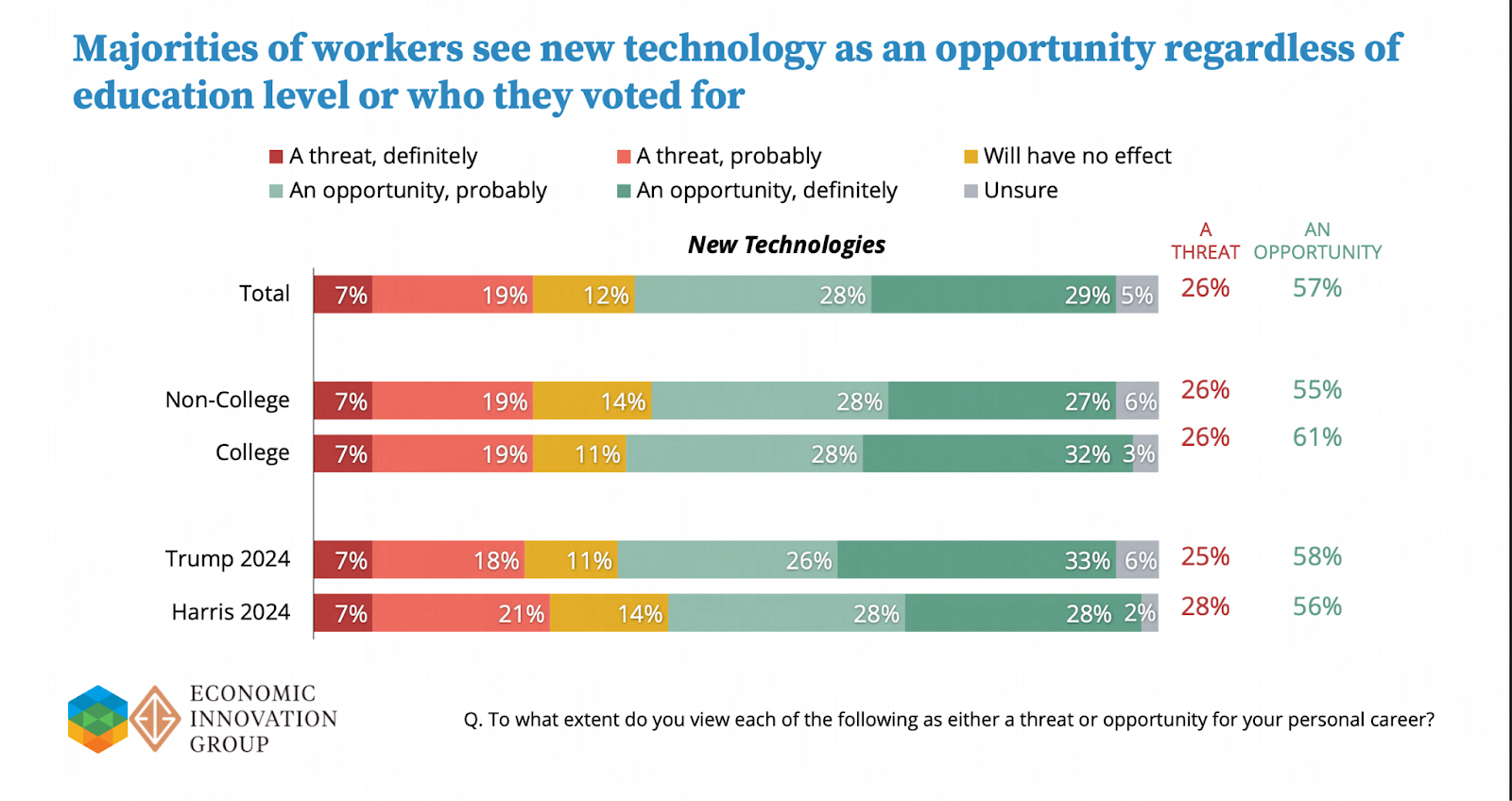
This missed opportunity is especially frustrating when workers across the board viewed tech as an opportunity – another part of Biden’s Digital Deficit.
As Biden took office, tech was in a hiring boom. According to CompTIA, the core US tech workforce reached nearly 6.5 million workers by end of 2024, with a median salary of roughly $104,556, which is more than double the national median wage of $49,500. Even more importantly for the future of the American economy, tech occupation employment is projected to grow at approximately twice the rate of overall employment in the coming decade.
Technology and tech-enabled roles are often well paid, increasingly remote-compatible, and frequently accessible through pathways other than a four-year degree. If your goal is broad-based national prosperity, the technology workforce is one of the most scalable and effective ways to get there.
The Biden Administration clearly understood parts of that story. It backed major efforts to expand broadband access and talked often about innovation. But when it came to jobs—especially in the public narrative of “Bidenomics”—the strategy narrowed to manufacturing and unions, leaving the country without anything like a coherent tech jobs strategy.
The jobs narrative centered on manufacturing and union labor
The Biden Administration “industrial policy” push included the CHIPS Act, Inflation Reduction Act manufacturing provisions, and large sections of the bipartisan infrastructure law, and was almost always framed as a manufacturing revival story, frequently paired with the language of “good-paying union jobs.” That framing was central to the Administration’s branding.
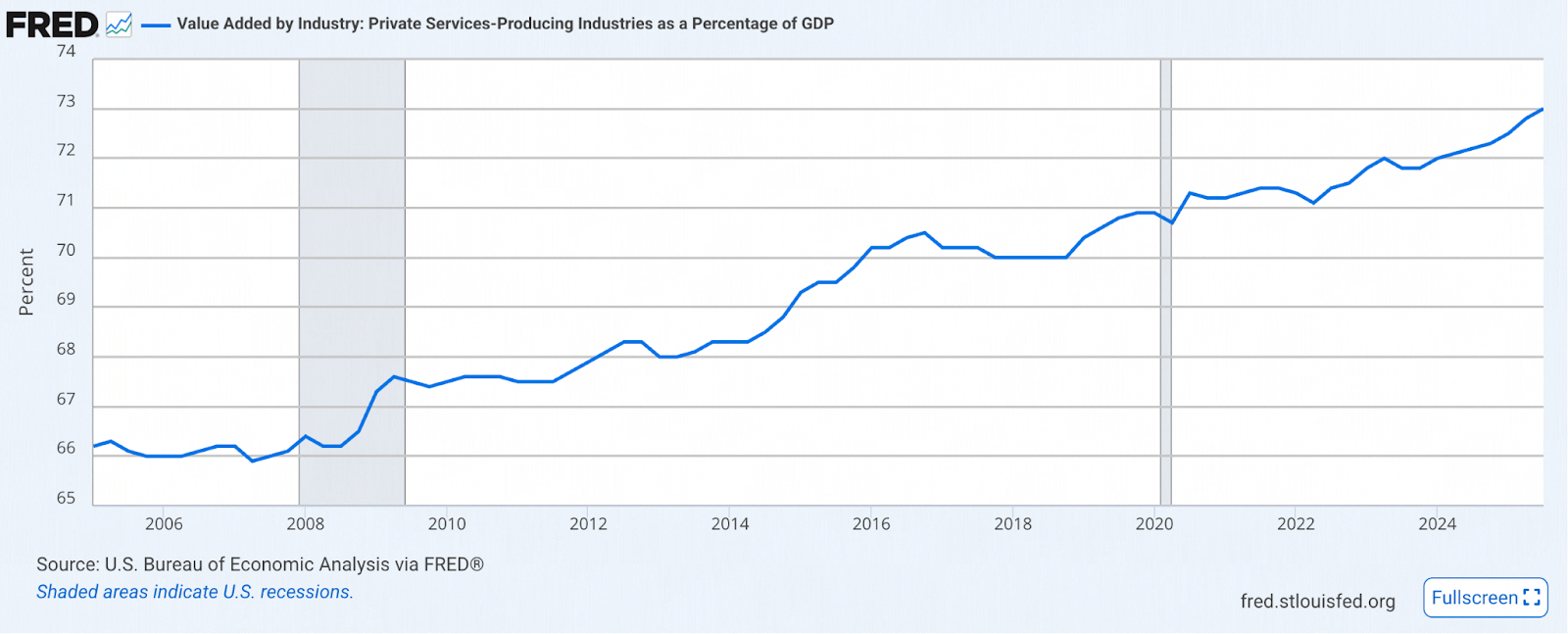
But manufacturing is a relatively small and structurally declining share of U.S. employment. Manufacturing’s share of total jobs peaked around World War II at roughly 38% and has fallen to around 8% over the past decade, while services rose to a little over 86% of total payrolls. That mismatch matters because a jobs message built around manufacturing is, by definition, built around a small minority of the labor market.
The U.S. economy is overwhelmingly services-based and modern services are increasingly tech-enabled.
The union framing was even narrower. BLS reports the overall union membership rate was 9.9% in 2024, and private-sector union membership was just 5.9%.
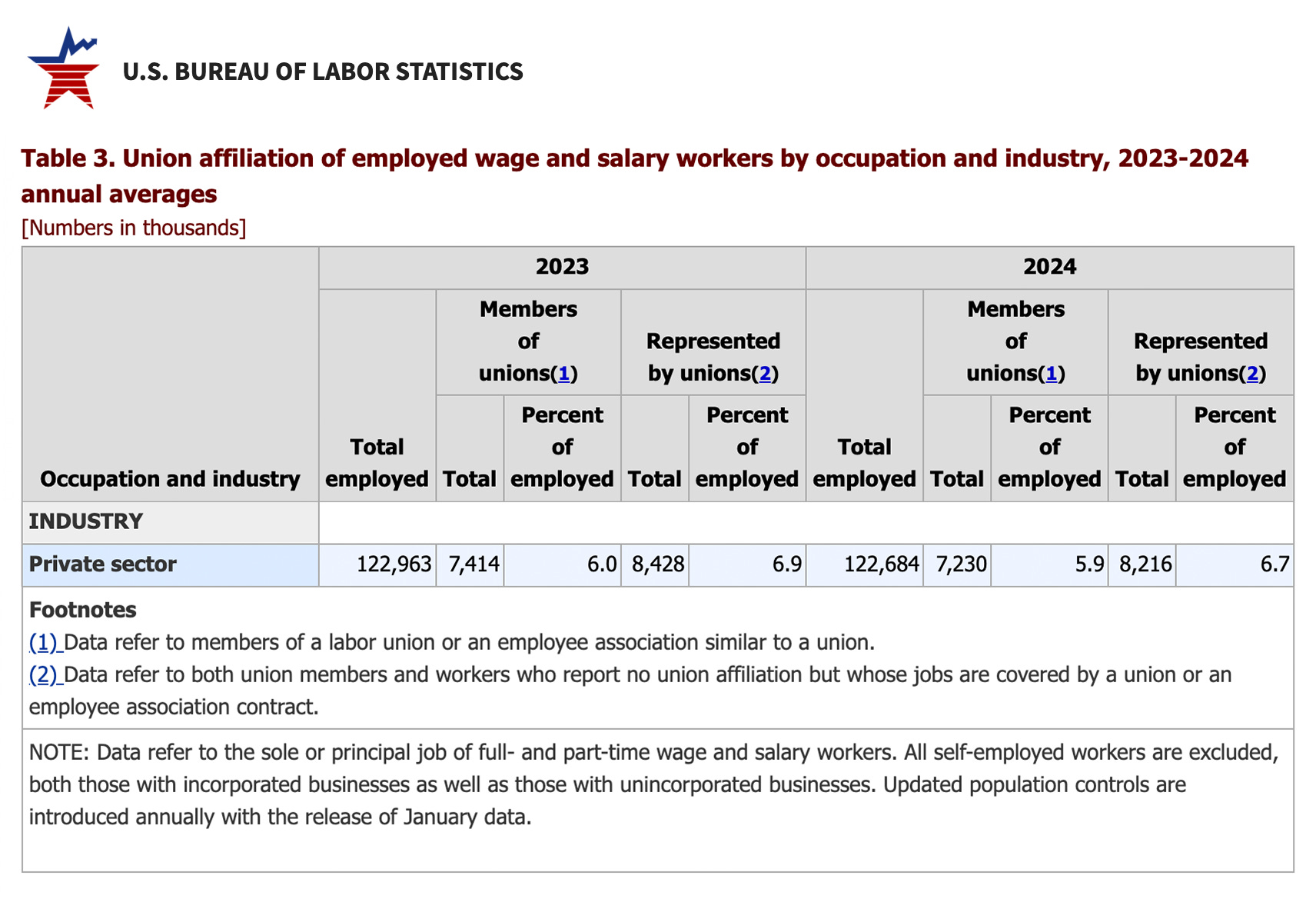
You can believe strongly in unions and still recognize that a “union jobs” frame speaks directly to a small portion of private-sector workers, especially in the fastest-growing white-collar and tech-related categories.
Broadband investments were real but they weren’t a tech workforce strategy
To its credit, the Administration made a major play on broadband. The BEAD program alone is a $42.45 billion federal effort to expand high-speed internet access nationwide, exactly the sort of enabling infrastructure needed for remote work and digital opportunity to spread beyond coastal hubs.
However, connecting people to the internet doesn’t connect them to quality careers in technology. A national tech jobs strategy would pair connectivity with a talent pipeline: credentials employers trust, portable training pathways, apprenticeships, and job-placement partnerships that explicitly aim to disperse tech employment geographically.
The tech workforce was already opportunity-rich
The missed opportunity becomes clearer when you look at how big tech employment already was. CompTIA’s State of the Tech Workforce 2025 estimates net tech employment (a combined measure including core tech occupations across the economy plus business professionals employed in tech companies) at 9.6 million workers in 2024.
BLS data reinforces the scale and quality of these careers. In its Occupational Outlook Handbook overview for computer and IT occupations, BLS projects about 317,700 openings per year on average from 2024–2034 and lists a median annual wage of $105,990 (May 2024)—far above the median wage for all occupations.
These are jobs that can exist around the country and increasingly accessible through nontraditional education pathways. If your goal is to create opportunity in more places, you don’t have to invent a new industry or force an industry back from overseas. You have to be willing to build and support the workforce that already exists and is projected to expand.
The pandemic tech hiring boom came but federal strategy didn’t follow through
During the COVID pandemic the tech labor market whipped between surge and retrenchment: rapid pandemic-era hiring, then layoffs and hiring freezes across parts of the sector, then signs of stabilization.
That volatility is precisely why a national strategy matters. When an industry grows quickly, especially an industry so central to productivity and service delivery, public policy can help smooth pathways for workers and build durable talent pipelines. But there was no equivalent of “CHIPS-for-tech-workers” or an IRA-scale jobs message for digital services.
Regulation and labor politics got attention; workforce expansion didn’t
The Administration was publicly engaged in labor politics around major employers, including high-profile moments around Amazon unionization efforts. At the same time, the U.S. tech labor market was absorbing the shocks of post-pandemic normalization without a clear national-level plan to sustain or expand the talent pipeline for tech-enabled service work.
Internationally, major U.S. platforms also entered a new compliance era in Europe. The EU’s Digital Markets Act (DMA) was adopted in 2022, entered into force in November 2022, and became applicable in 2023, imposing wide-ranging obligations on designated “gatekeepers.” Europe’s efforts to go after American tech companies was never treated by the Administration as an attack on America’s workers, but that is certainly what it amounted to.
What a real tech jobs strategy could have looked like
The Biden Administration built real assets and made real investments, especially semiconductors and broadband. But it never paired those assets with a clear national strategy to grow and sustain tech employment as a geographically distributed opportunity engine. That blind spot was a strategic miss at a moment when the tech workforce was projected to grow quickly, but also faced clear headwinds from post-pandemic societal changes, rising interest rates, and the drying up of venture capital investment.
This moment came and passed while the economy was, as nearly always, voter’s number one issue and they are optimistic about the role of technology in providing good jobs.