
The Digital Deficit: A Missed Opportunity for Making Government Work Better

Last week I argued that the Biden Administration’s failure to stand up for U.S. tech leadership on the global stage created a “Digital Deficit.”
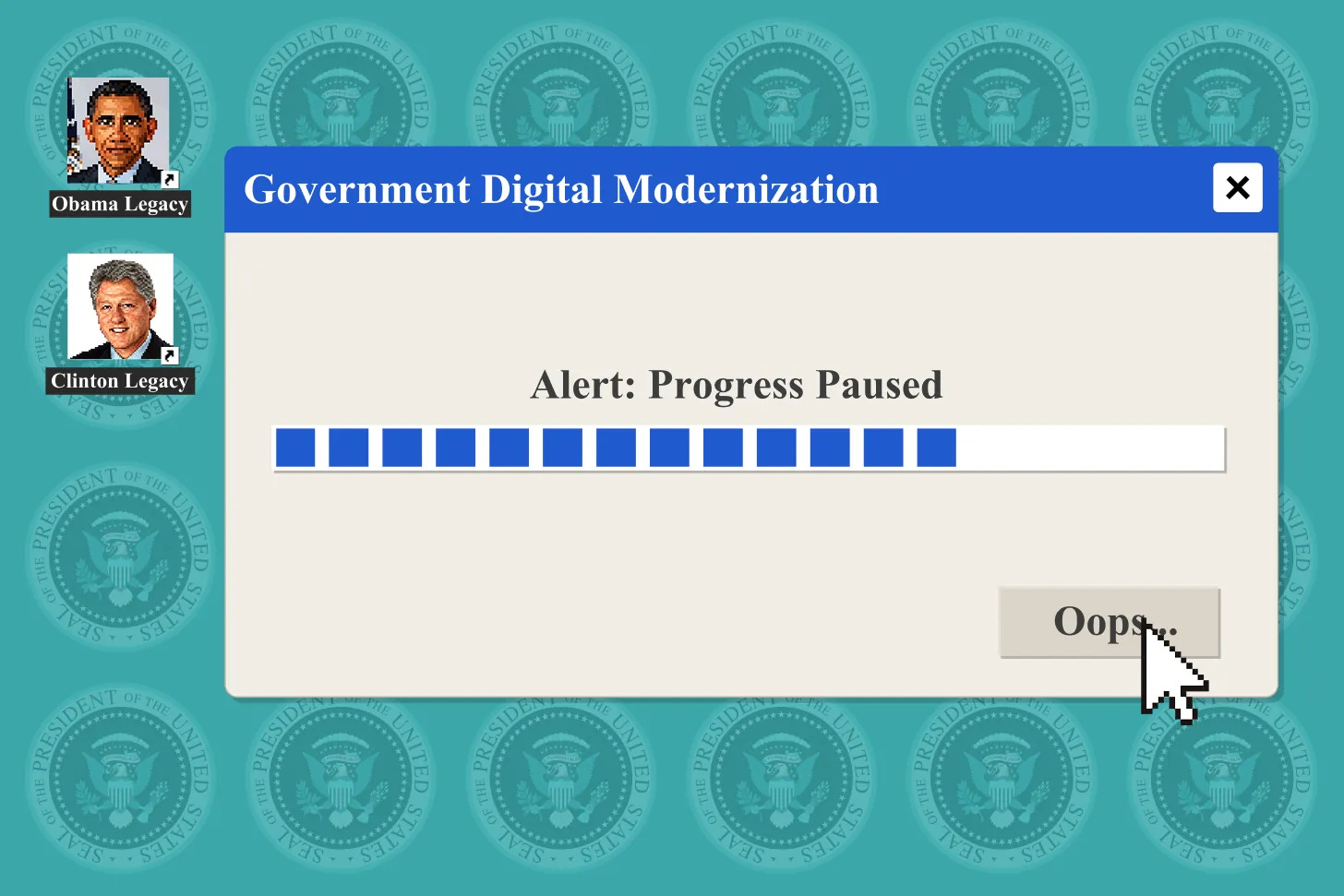
There was another aspect of the Digital Deficit: how the Biden Administration largely squandered a digital advantage from the Obama Administration, failing to make dramatic progress on how the government uses tech to deliver services efficiently.
Despite the right rhetoric and some pockets of innovation, the deficit in tech leadership, talent, and strategy opened a vulnerability that ultimately reshaped the governing landscape with Trump’s return to office.
Democrats “Owned” Government Tech Reform
For decades, Democrats positioned themselves not just as defenders of government but as reformers determined to make it work better through technology and management innovation.
In the 1990s, Vice President Al Gore led the Reinventing Government initiative aimed at making the federal government work better and cost less. This effort involved federal workers, private-sector partners, and a focus on streamlining processes, cutting red tape, and introducing technology into how government operated.
The initiative saved billions of dollars, eliminated hundreds of thousands of federal positions through attrition and buyouts, and helped reshape government service delivery. This long tradition of reform helped create a brand identity for Democrats as the party that could manage and modernize government effectively.

What Worked: The Obama Legacy in Government Tech
In the Obama Administration, the federal government made real progress toward modernizing its digital tools and services by building institutions that brought technology talent into public service:
In 2014, after the disastrous rollout of HealthCare.gov, the White House created the United States Digital Service (USDS), a team of technologists tasked with fixing digital systems and improving citizen interactions with government. By 2024, USDS had worked with more than 30 agencies to deliver better digital services.
USDS changed how digital services delivery happened in government, embedding teams with existing agency employees, changed hiring practices, and empowered people to make significant organizational change. The origins of the USDS have their own program and history at Harvard, where it is described as a movement
Alongside USDS was 18F, a digital services unit inside the General Services Administration (GSA) that paired designers, engineers, and product managers with agencies to build, buy, and improve technology for public use. Its practices spread agile, user-centered methods throughout government IT.
Professor Kayla Schwoerer described 18F as “an in-house digital services consulting agency that brought Silicon Valley expertise to government, challenging decades of outdated procurement practices and introducing a radical new approach to building digital public services.”

These initiatives delivered tangible improvements to systems that Americans rely on every day and, along with the Presidential Innovation Fellows program (another Obama Administration initiative), helped create a pipeline for top tech talent to serve the public in meaningful ways.
At the heart of this effort was Jen Pahlka, founder of Code for America and a former U.S. Deputy Chief Technology Officer. Pahlka and her CTO colleagues played a major role in shaping USDS and the broader civic tech movement precisely because she saw deep flaws in how government traditionally operated and knew how technologists could help fix them.
The Biden Administration Tech Modernization Efforts Languish
Stepping into office with the Obama Administration institutions still largely in place, it would have been reasonable to assume that Biden and his senior team would look to reinvigorate this Obama era legacy and double down on efforts to improve government services through modernization and technology.
Early signs from the Administration looked good: President Biden issued an executive order focused on making government services user friendly and accessible, explicitly calling out the role of tech in making this happen.
In practice, however, a lack of strategic leadership and prioritization slowed progress.
Despite creating ambitious digital policy frameworks and launching initiatives to recruit tech talent, key modernization priorities stalled due to misalignment between U.S. Digital Service, GSA, and the Office of the Federal Chief Information Officer — with senior leaders failing to articulate a coherent, unified vision.
Even as Biden pushed executive actions on issues like AI and digital skills, he never filled a long-vacant Chief Technology Officer role, leaving no single, Senate-confirmed advocate for technology leadership at the heart of the administration. This lack left a vacuum in driving cohesive change and communicating the value of technology to government transformation.
Talent pipelines frayed. While efforts like a federal “talent surge” for AI hiring were promoted, there were challenges in attracting and retaining top tech experts. Biden’s team fundamentally did not view having experienced Silicon Valley technologists as an asset, and even avoided hiring from industry for coalition management purposes. So they made no effort to recruit and place industry experts in key roles, or rally their expertise to make government work better.
In short, the Biden years saw some good signals and pockets of innovation, but not the sustained strategic push that would fully extend the Obama-era momentum into a durable modernization effort.
This perhaps should not have been a surprise, with tech adoption and modernization never being a top priority of President Biden himself, Elizabeth Warren and her allies creating a revolving door panic that limited tech talent and progressives focused on closing the digital divide around access to broadband, not government services.
What Happened Next: A Political and Institutional Fallout
The costs of this digital deficit became clear once the Trump Administration returned to power in 2025. Instead of building on established digital modernization teams, the new administration reorganized or dismantled them under the Department of Government Efficiency (DOGE):
By March 2025, GSA’s 18F unit was shuttered, with layoffs sent in the middle of the night to dozens of digital specialists — signaling a stark departure from the collaborative, mission-driven approach of previous digital teams.
In late February, more than 20 civil-service technologists at USDS resigned rather than work under DOGE leadership, citing concerns about political interference and lack of needed expertise; a dramatic breakdown of internal capacity to modernize government tech.
The failure of Democrats to sustain and scale digital modernization opened space for an entirely different model of government tech: one that prized destruction over improvement. And when government tech falters, voters notice even if they don’t see the nuance behind the causes.
Why This Matters for Democrats
Democrats are widely understood as the party of government. When government works well, delivering benefits, modern services, and seamless experiences that identity can be a strength. But when services are slow, digital systems obsolete, or experiences frustrating, Democrats pay the price.
A weakened technology backbone in government feeds two political narratives:
Republicans seize on dysfunction to argue that government is inherently bloated and inefficient, pushing privatization or radical deregulation.
Democrats, by default, are left defending the status quo and when the public’s experience is poor, that defense feels hollow.
In the era of digital expectations shaped by private-sector experiences, ineffective government tech is a political vulnerability.
Closing the Digital Deficit
Obama’s investment in digital talent and user-centered systems showed what was possible. The Biden Administration’s pause in strategic leadership allowed that advantage to fade. And the resultant political terrain empowered narratives that weaken public institutions and shift power to private markets.
If Democrats want to reclaim the story of effective governance, they must make government tech excellence a core part of their narrative for what governing in a Democratic administration will look like in the future.