
Democrats Need a New Digital Trade Strategy


As U.S. Trade Representative under President Biden, Katherine Tai made a 180-degree turn in our digital trade strategy; going from an Obama-era approach of defending the U.S. tech sector against foreign discrimination to an approach of tacitly endorsing other countries’ anti-US protectionism.
Now Tai wants Democrats to carry on the same failed digital trade strategy she oversaw. It is time to turn the page.
Tai’s Approach
As USTR, Tai’s argument was that because Congress and regulators were debating privacy, competition, AI, and platform power at home, U.S. trade policy should stop pushing traditional digital trade rules abroad. In October 2023, USTR withdrew support at the WTO for proposals on cross-border data flows, data localization, and source-code protection. The agency said it needed “policy space.”
That move broke with Obama-era practice, which was also largely followed by Trump’s first term approach. It also spilled into the Indo-Pacific Economic Framework, where the Biden Administration backed away from key digital provisions in the very region where the United States most needs to offer an alternative to China’s model of digital control.
This was nominally done due to the unsettled nature of U.S. policy, but it served the interest of the anti-tech faction of the Democratic party. Elizabeth Warren had been warning that digital trade rules were a “Big Tech” backdoor around regulation, and progressive lawmakers later thanked Biden and Tai for suspending parts of the IPEF digital text and withdrawing WTO positions.
But the Biden Administration tech regulation and digital trade policies were a flop. The digital deficit created from failing to defend tech companies from targeted international regulation hurt the American economy, alienated the tech sector, and did not win political support from voters.
Unfortunately, Tai doesn’t see those failures. Earlier this year she launched a new nonprofit organization, the Coalition for New Trade, which rolled out a 2026 Trade Policy Agenda.

Democrats should focus on digital trade policies that recognize and reinforce the success of the American tech sector, which is by far the most successful and innovative in the world. But Tai’s digital trade proposals turn that principle upside down, making America less able to defend and export the tools created by our world-leading tech sector.
Proposals Are Not Laws
Tai’s arguments and actions as USTR operate from a strange premise: because her allies in the U.S. Congress have introduced bills aimed at large tech firms, U.S. trade negotiators should stop defending those firms abroad.
But bills are not laws. The American Innovation and Choice Online Act, the Open App Markets Act, and federal privacy proposals generated debate, but they did not become the governing framework of the United States. The fact that Congress is considering various tech regulations does not mean the executive branch should invite Europe, Canada, India, or anyone else to impose discriminatory treatment on U.S. companies.
America’s global tech leadership did not happen by accident. It happened because our system has gotten the regulatory balance and investment right compared to other countries: open markets, deep capital pools, world-class universities, strong speech protections, flexible labor markets, and enough regulatory breathing room for companies to build products people around the world actually want to use. Democrats should be proud of this innovation legacy, it was largely our party that built it. We should be willing to defend it on the global stage.
Limiting Free Data Flows Benefits China
Tai’s digital trade agenda also argues that concerns over privacy, authoritarian governments, and AI should make policymakers skeptical of “free data flows.”
This is the wrong lesson. Digital trade rules do not mean lawless data flows. The digital trade chapter of the United States-Mexico-Canada Agreement (USMCA) includes commitments on personal information protection and online consumer protection, while cross-border data rules can be paired with exceptions for legitimate public policy objectives.
The global AI race makes it even more important that we don’t use our own trade provisions to hobble American innovation. On the international stage, the AI race is not being fought among dozens of equal competitors, it is effectively a race between the United States and China.
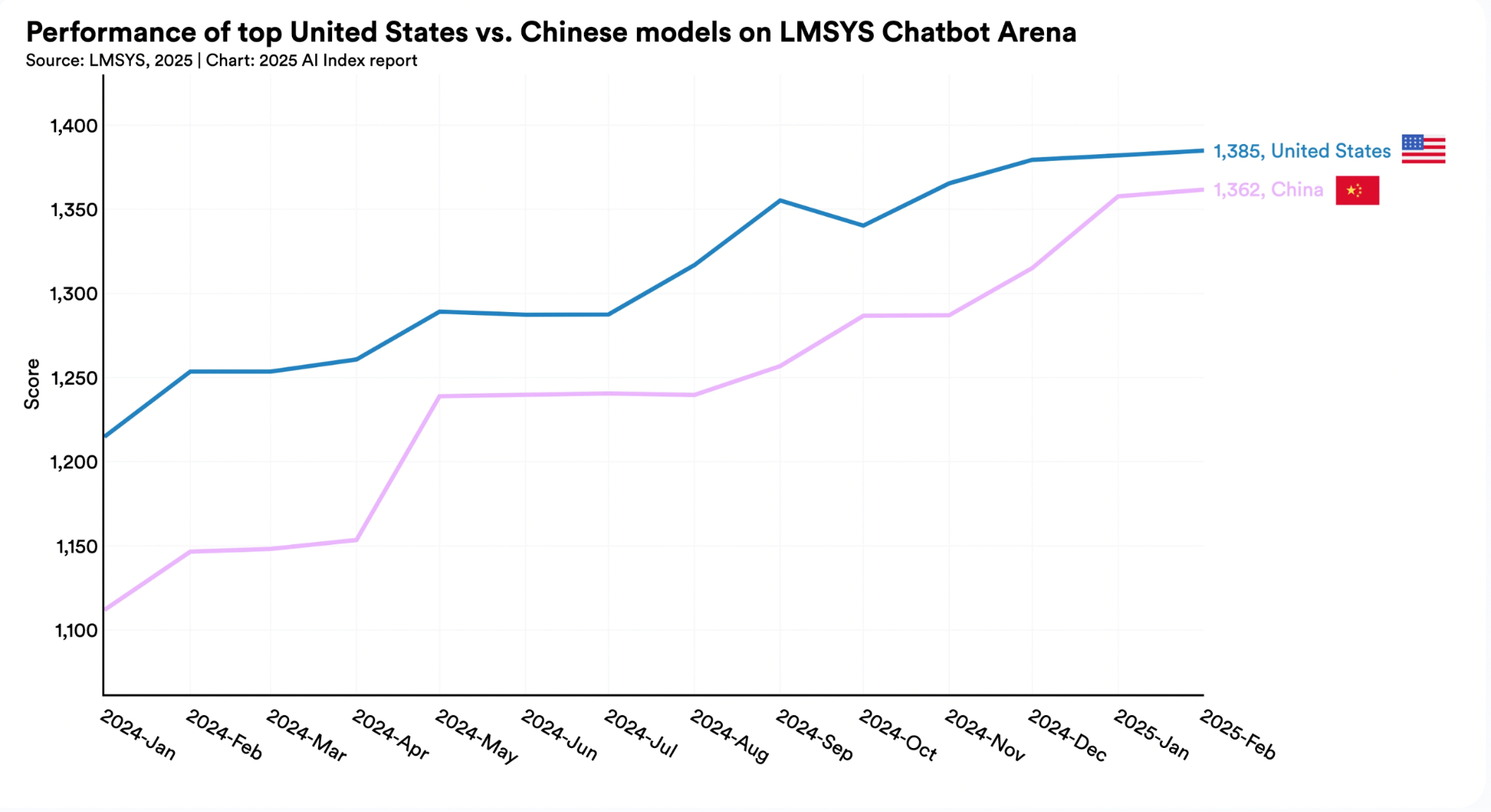
If the United States steps back from writing digital rules, China will not politely pause its own project. Beijing already blocks many U.S. digital services behind the Great Firewall while nurturing domestic champions. A world of data localization and digital sovereignty sounds neutral or even ideal. In practice, it gives China and other authoritarian and protectionist governments more tools to exclude American firms and entrench their own models.
Tai’s digital trade agenda points to China as an example of a country that has worked to rein in its tech sector, stating, “Even the PRC has recognized the threat that large technology companies can pose to government itself and acted to constrain that power.”
To state the obvious, we should not be looking to China for regulatory and governance guidance. The PRC also recognizes the threat to their government from a free press and freedom of speech for its citizens, and exercises a high degree of control over commercial activity as a mechanism of control in an authoritarian state.
Democrats should want the opposite: exporting democratic technology rules. That means privacy, security, transparency, interoperability, and competition principles that reflect open societies. Our digital trade rules should reflect this desire.
The Tax Story Gets It Backwards
Tai’s digital trade agenda also criticizes technology companies for opposing foreign digital services taxes after Congress failed to enact the OECD tax deal, stating:
It is also clear that large technology companies are using their leverage to press for precisely the types of deregulatory outcomes 1990s-era trade agreements were designed to facilitate. Having taken no action to shepherd the Organization for Economic Cooperation and Development tax deal through the Senate, which would have averted the imposition of digital services taxes on those companies, they now continue to press for, and are succeeding in getting, trading partners to stand down from their taxation efforts.
The OECD process was designed to create a global solution and remove unilateral digital services taxes. The agreement was negotiated with the support of Treasury Secretary Janet Yellen, and major U.S. technology companies supported the agreement because they preferred a uniform global framework to a patchwork of country-by-country taxes aimed largely at them. “I think they’re going to be telling members of Congress that they like this agreement and they can live with it,” Yellen said of the tech companies. “When you have businesses supportive, rather than lobbying against something, I think that will be helpful.”
But when Congress fails to complete the process, U.S. officials do not have to shrug as trading partners impose discriminatory interim taxes.
No Democratic administration would accept a foreign tax specifically designed around Boeing, Caterpillar, or Hollywood exports. Tech should not be treated differently just because an anti-tech political faction dislikes the companies within the United States.
Defending U.S. Firms Is Not “National Champion” Policy
The agenda’s most revealing complaint is that the U.S. government treats technology companies as “national champions” and that “efforts to regulate these companies in the United States have been thwarted by their sheer wealth and power.” This framing is meant to make ordinary trade enforcement sound corrupt and comes straight out of the faculty lounge populist playbook. Tai says:
The U.S. government effectively treats these companies as if they are national champions. However, tariffs to support monopolists’ goals is precisely what Adam Smith decried in the Wealth of Nations, and what drove Gilded Age trade policy in the United States.
But defending U.S. companies from foreign discrimination and targeted regulation is not the same as giving them immunity at home. The European Commission’s first Digital Markets Act (DMA) gatekeeper designations were Alphabet, Amazon, Apple, ByteDance, Meta, and Microsoft – five American companies and one Chinese company. No European firm made the initial list. While that does not prove bad faith, it is clearly an indication that European regulations are good at destroying the vitality of the tech sector and it is exactly the kind of pattern U.S. officials should scrutinize.
The same is true for digital services taxes. USTR has repeatedly treated discriminatory digital services taxes as legitimate trade concerns, including under both Democratic and Republican administrations. Defending market access is a classic function of trade policy.
Regulation by Americans for U.S. Companies
The U.S. tech sector is one of the country’s great strategic assets. The digital economy adds nearly $5 trillion in value to the U.S. economy, over 28 million jobs, and digital services are central to America’s export strength.
U.S. trade agreements should defend the interests of America’s most important global industry. This is the point of trade policy – not a scandal.
Democrats should improve both domestic tech regulations and digital trade rules where they need improving: privacy protections, cybersecurity, AI accountability, labor impacts, and consumer safety. But ceding our role in defending U.S. interests on international digital trade agreements would tell every trading partner that America is no longer serious about defending its own innovators.
The better path is clear: regulate real harms at home, fight discrimination abroad, and export democratic rules for the digital economy.
“ America’s global tech leadership did not happen by accident.”
You’re right. It’s because we gave them a wide berth to do whatever they wanted, move fast, break things, including our democracy, and they all bent the knee to Trump and his dictatorship starting last year. Maybe there’s a reason why Europe & more are correct in continuing to give American tech companies the side-eye? What is the Blue Horizon Project’s opinion on how American tech companies have rendered themselves subservient to Trump?
When Blue Horizon Project & Chamber Of Progress actually support real regulations with teeth all the way through, I’ll start to become a believer. AICOA and OAMA would have been a good start, but tech lobbyists like Chamber Of Progress used scaremongering to stop them from becoming law.
https://www.vice.com/en/article/big-tech-lobbyists-use-trans-people-to-avoid-antitrust-regulation/